What Is Power Reserve in a Watch? Beginner’s Guide to Watch Energy
🕰️ What Is Power Reserve in a Watch? A Beginner’s Guide to Understanding Watch Energy
Introduction
If you’ve ever looked at a watch description and seen “Power Reserve: 40 Hours” or “72-Hour Power Reserve,” you might have wondered — what does that actually mean?
Power reserve is one of the most important features of an automatic or mechanical watch, yet many beginners don’t fully understand it.
In this guide, we’ll explain what power reserve means, how it works, and why it matters when choosing your next timepiece.
⚙️ What Is Power Reserve?
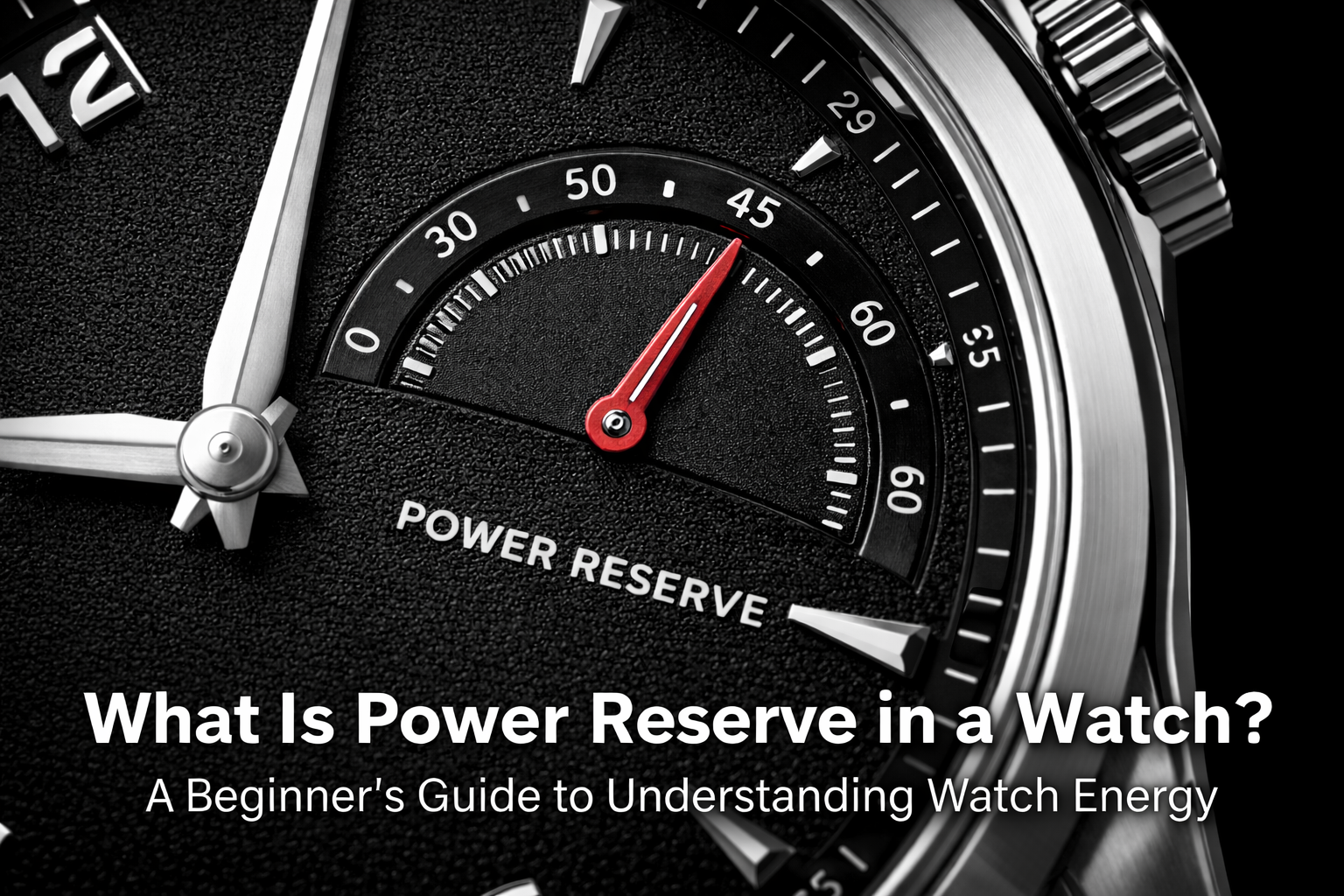
Power reserve refers to the amount of time a watch can run after it has been fully wound — without additional movement or winding.
In simple terms:
Power reserve = How long your watch keeps running when you take it off.
For example:
-
A 40-hour power reserve means the watch will run for about 40 hours after being fully wound.
-
A 72-hour power reserve means it can last three days without being worn.
If you’re new to automatic watches, you may also want to read our Complete Watch Buying Guide for Beginners to understand how mechanical movements function.
🔄 How Does Power Reserve Work?
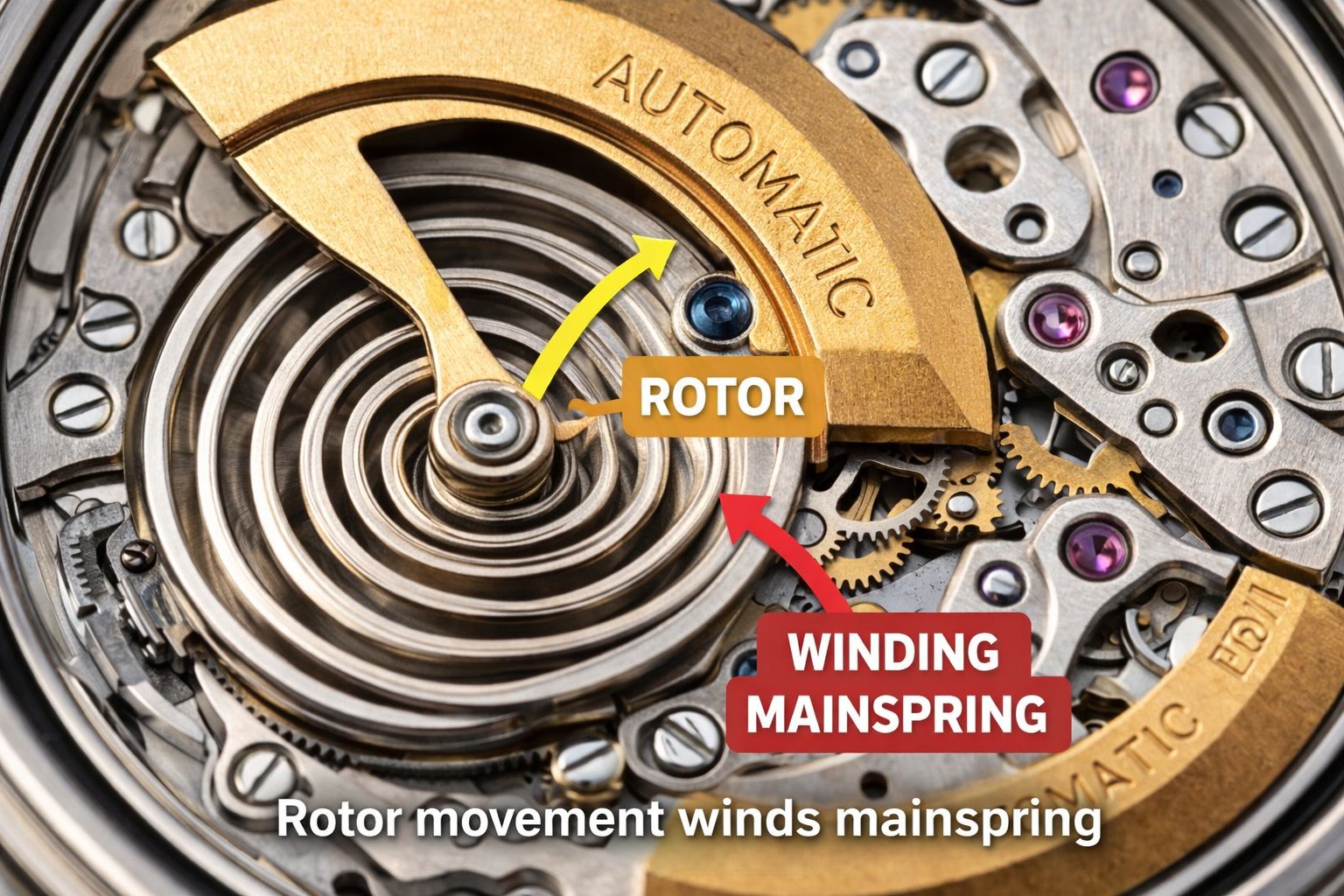
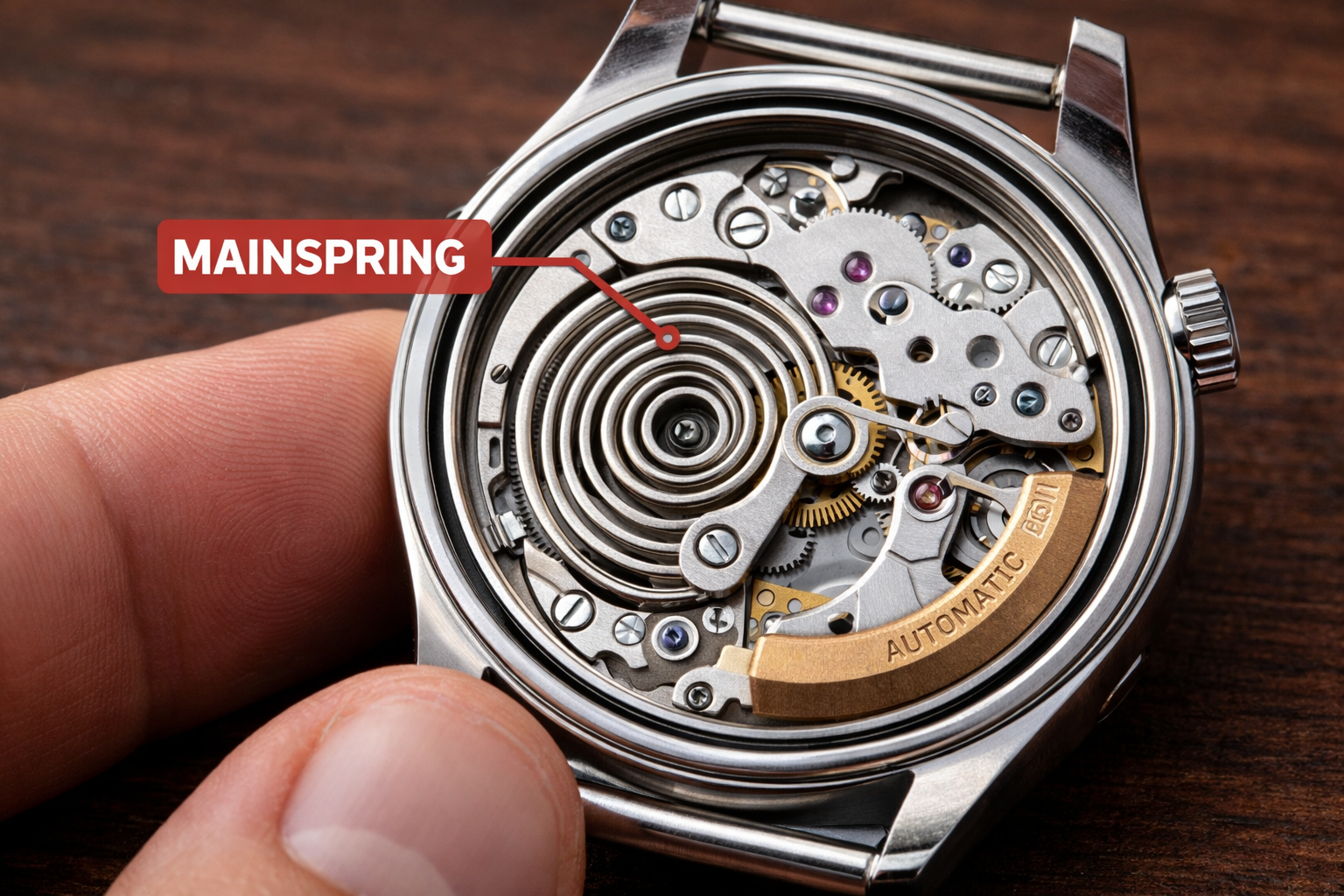
Inside an automatic or manual watch is a component called the mainspring.
Here’s how it works:
-
When you wear the watch (automatic) or wind it manually, the mainspring tightens.
-
The stored energy is gradually released.
-
That energy powers the gears and balance wheel.
-
The watch keeps ticking until the energy runs out.
Once the mainspring fully unwinds, the watch stops.
To better understand how automatic movements differ from quartz, you can read our Automatic vs Quartz Watch Comparison.
⏳ How Much Power Reserve Is Good?
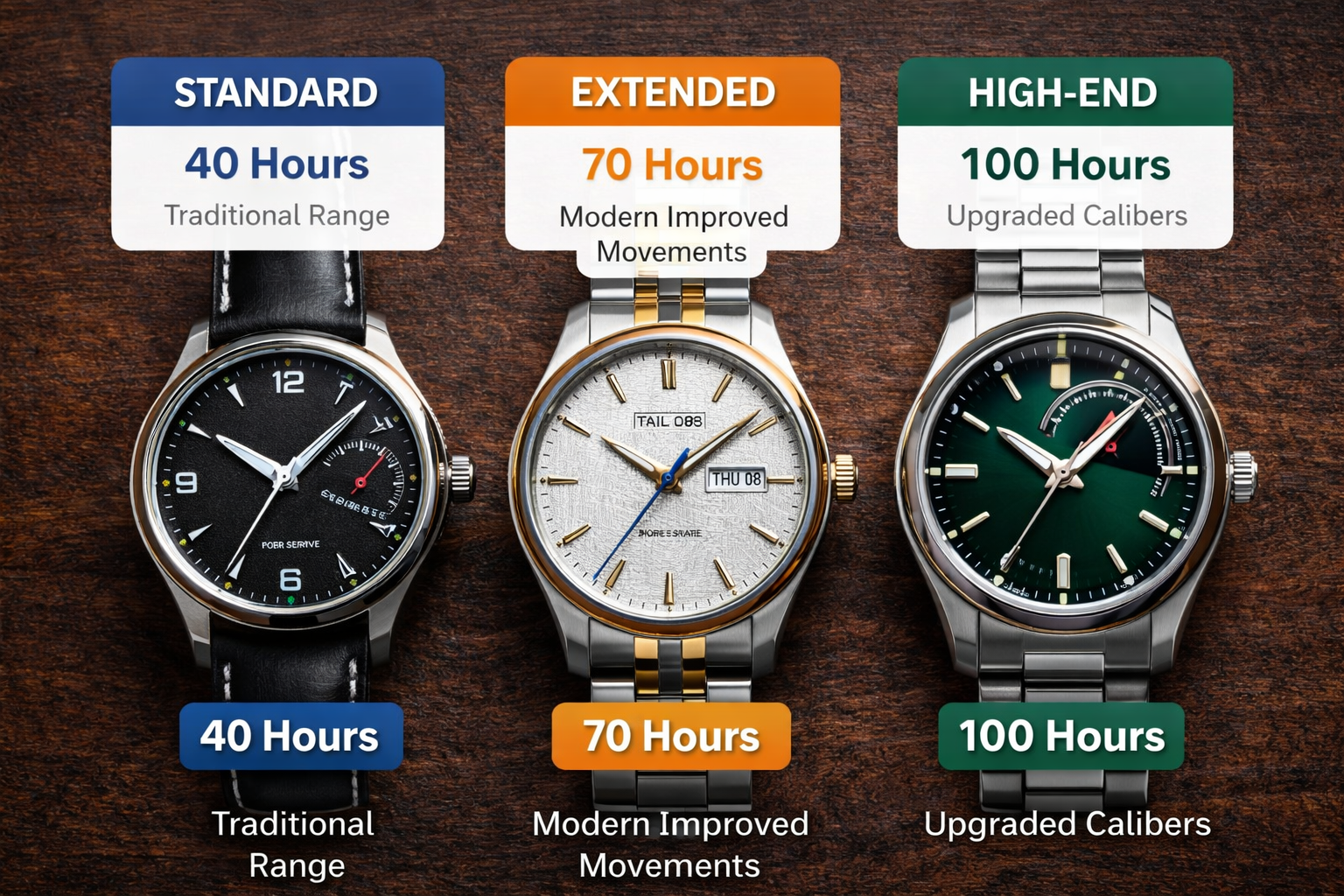
Most standard automatic watches offer:
-
38–42 hours (traditional range)
-
48–60 hours (modern improved movements)
-
70–80+ hours (high-end or upgraded calibers)
So what’s ideal?
It depends on your lifestyle.
✅ 40 Hours Is Enough If:
-
You wear the watch daily
-
You don’t rotate watches frequently
✅ 70+ Hours Is Better If:
-
You rotate between multiple watches
-
You don’t wear it every day
-
You want a “weekend-proof” watch
🔋 Power Reserve vs Quartz Watches
Quartz watches don’t have a traditional power reserve.
Why?
Because they run on batteries. As long as the battery has charge, the watch runs.
If you’re unsure which movement fits your needs, check our guide on Mechanical vs Quartz Watches: Which Is Better for You?
🧠 Does Higher Power Reserve Mean Better Quality?
Not necessarily.
A higher power reserve often requires:
-
A longer mainspring
-
More efficient gear ratios
-
Advanced engineering
But quality depends on:
-
Movement reliability
-
Accuracy
-
Build quality
-
Servicing interval
Speaking of servicing, regular maintenance ensures your movement performs at its best. Learn more in our guide: How Often Should You Service Your Automatic Watch?
🛠️ What Happens When Power Reserve Runs Out?
When your automatic watch runs out of power:
-
It stops ticking
-
The time and date freeze
-
You’ll need to reset it
To restart:
-
Manually wind the crown 20–30 turns
-
Or wear it for a few minutes to activate the rotor
💎 Why Power Reserve Matters When Buying a Watch
Power reserve affects:
-
Convenience
-
Reliability
-
Daily usability
-
Watch rotation flexibility
If you plan to build a small watch collection, choosing a longer power reserve model can make your experience much smoother.
Final Thoughts
Power reserve may sound technical, but it simply tells you how long your watch can run without being worn.
For daily wearers, a standard 40-hour reserve is perfectly fine.
For collectors or occasional wear, a 70+ hour reserve offers more flexibility and convenience.
Understanding this feature helps you choose a watch that fits your lifestyle — not just your style.
🛒 Explore Automatic Watches Built for Performance
Looking for automatic watches with reliable power reserve and modern engineering?
Explore our Men’s Automatic Watch Collection — designed for durability, precision, and everyday wear.