What are you looking for?
Search
Watch Straps Guide: How to Choose the Right Strap (Leather, Metal, Rubber, Nylon)
Watch Straps Guide: How to Choose the Right Strap (Leather, Metal, Rubber, Nylon)

Introduction
A strap can completely change how a watch looks and feels. The same watch can look sporty on rubber, classic on leather, and tougher on a metal bracelet. But choosing the “right” strap isn’t just style—it’s also about comfort, durability, sweat, water exposure, and how you wear your watch day to day.
This guide breaks down the most common strap types, who they’re best for, and how to pick the right size and fit.
1) First: Know Your Strap Size (Width and Length)

Before materials, confirm two measurements:
Strap width (lug width)
Common sizes: 18mm, 20mm, 22mm.
This is the width of the strap where it connects to the watch lugs.
Strap length
Most straps come in standard lengths (short/regular/long). If your wrist is small or large, strap length matters more than people expect.
If you want a simple fit guide (case diameter + lug-to-lug + strap width all together), use: Watch Size Guide: How to Choose the Perfect Fit for Your Wrist.
2) Leather Straps: Classic, Comfortable, Not Water-Friendly
Best for
-
office wear, smart casual, dressy looks
-
cooler climates
-
people who want a lightweight feel
Pros
-
comfortable and flexible
-
looks premium quickly
-
works with dress and minimalist watches
Cons
-
doesn’t love sweat or water
-
can crack if dried out
-
absorbs odor if worn in hot weather
Care tips
-
avoid soaking and hot water
-
wipe with a lightly damp cloth
-
let it air-dry away from heat and sun
If you want the safe cleaning method, see: How to Clean a Watch Safely: Bracelet, Case, and Crystal (At Home Guide).
3) Metal Bracelets: Durable, Heavier, Best All-Rounder
Best for
-
everyday wear
-
people who sweat or wash hands often
-
a “one watch” lifestyle
Pros
-
very durable
-
handles water exposure better than leather
-
easy to rinse and wipe clean (when appropriate)
Cons
-
can feel heavy
-
can pull arm hair (depends on bracelet design)
-
scratches are inevitable over time
Comfort note
Bracelet sizing matters—too tight is annoying; too loose flops around and causes desk scratches.
4) Rubber Straps: Best for Heat, Water, and Sport
Best for
-
summer wear
-
gym, sports, outdoor use
-
swimming (when your watch is suitable)
Pros
-
water and sweat friendly
-
lightweight and comfortable
-
great for sport watches and dive-style watches
Cons
-
cheaper rubber can crack or get sticky
-
dust can cling to matte rubber
-
fit can feel “sweaty” if the strap doesn’t breathe well
If you’re around water often, make sure your watch rating truly matches your use. See: Watch Water Resistance Explained: What 30m, 50m, 100m Really Mean.
5) Nylon / NATO Straps: Lightweight, Casual, Travel-Friendly
Best for
-
casual everyday wear
-
travel
-
people who like quick strap swaps
Pros
-
breathable and light
-
easy to wash
-
typically affordable
-
many colors and styles
Cons
-
looks more casual than leather
-
adds thickness under the watch (can make it sit higher)
-
can stay wet for a while after water exposure
6) Strap Choice by Lifestyle (Fast Guide)

If you want a quick decision:
-
Office / smart casual: leather
-
All-around daily: metal bracelet
-
Hot weather / sport: rubber
-
Travel / casual rotation: nylon/NATO
And if you’re building one “do-it-all” setup, this helps: How to Choose the Right Watch for Everyday Wear.
7) Comfort and Fit Tips (Small Details That Matter)
-
If the watch feels top-heavy, try a lighter strap (nylon/rubber)
-
If you hate sweat buildup, avoid thick leather in summer
-
If you bump your watch on desks, a strap may reduce scratch risk vs bracelet
-
If you have a small wrist, thinner straps and smaller buckles look cleaner
8) How to Store Spare Straps (So They Last Longer)
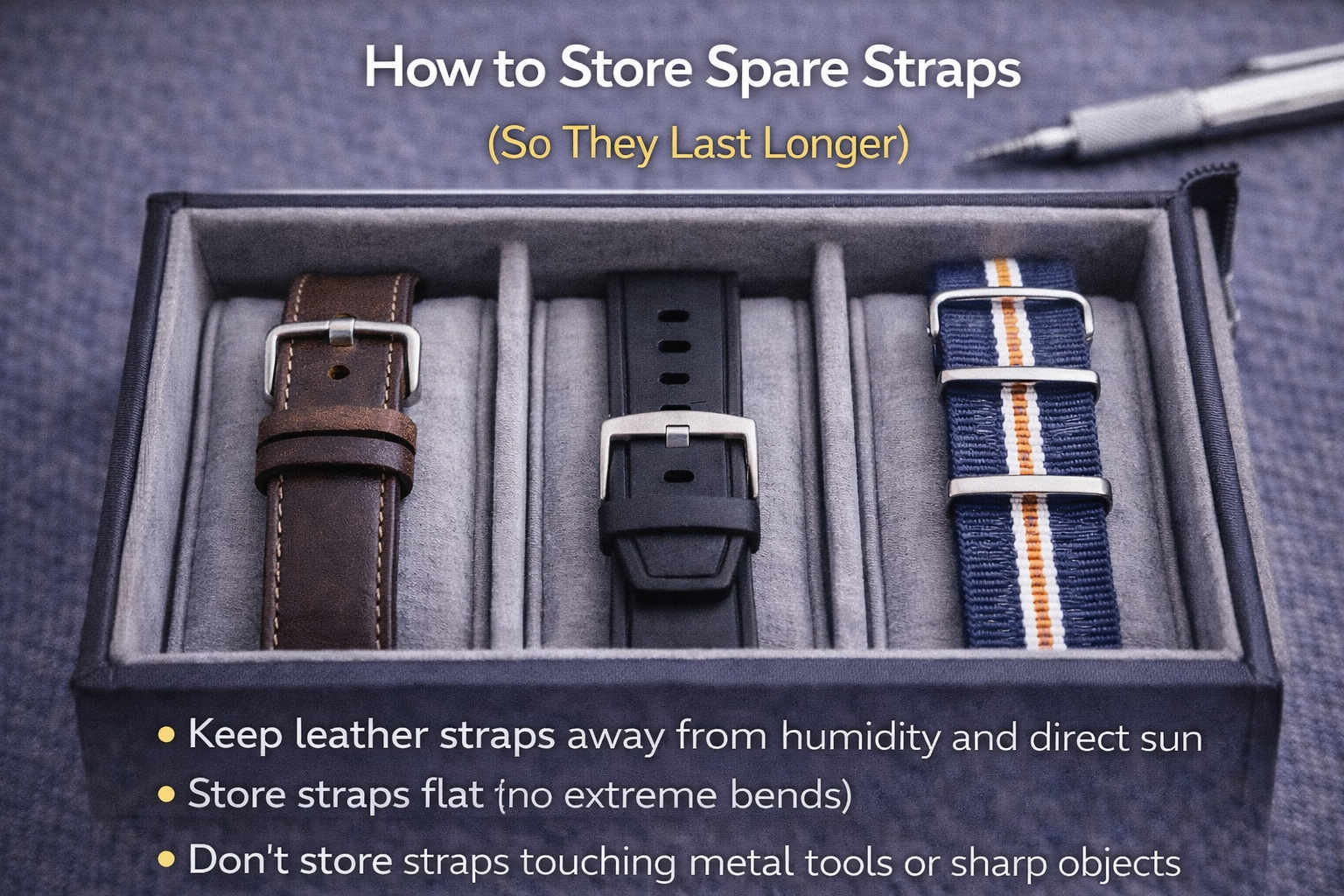
Straps also age when stored badly.
-
keep leather straps away from humidity and direct sun
-
store straps flat (no extreme bends)
-
don’t store straps touching metal tools or sharp objects
If you want the full storage checklist that also protects watches: How to Store Your Watches Properly: Avoid Scratches, Moisture, and Battery Damage.
FAQ
Q1: What strap is best for sweating?
Rubber or nylon are usually the best. Leather absorbs sweat and can smell over time.
Q2: Can I swim with a leather strap?
Not recommended. Even if the watch can handle water, leather straps usually can’t.
Q3: What strap looks most “premium”?
Leather can look premium fast, but a well-finished metal bracelet can feel the most robust and high-end long-term.
Q4: What’s the most comfortable strap type?
It depends on climate and wrist. Many people find rubber and nylon the most comfortable in warm weather; leather in cooler weather.
Q5: Why does my strap feel too stiff?
Leather often needs break-in time. If it remains stiff, it may be low-quality leather or overly thick padding.