Watch Straps Guide: Leather vs Steel vs Rubber vs NATO (Which One Fits Your Lifestyle?)
Watch Straps Guide: Leather vs Steel vs Rubber vs NATO (Which One Fits Your Lifestyle?)
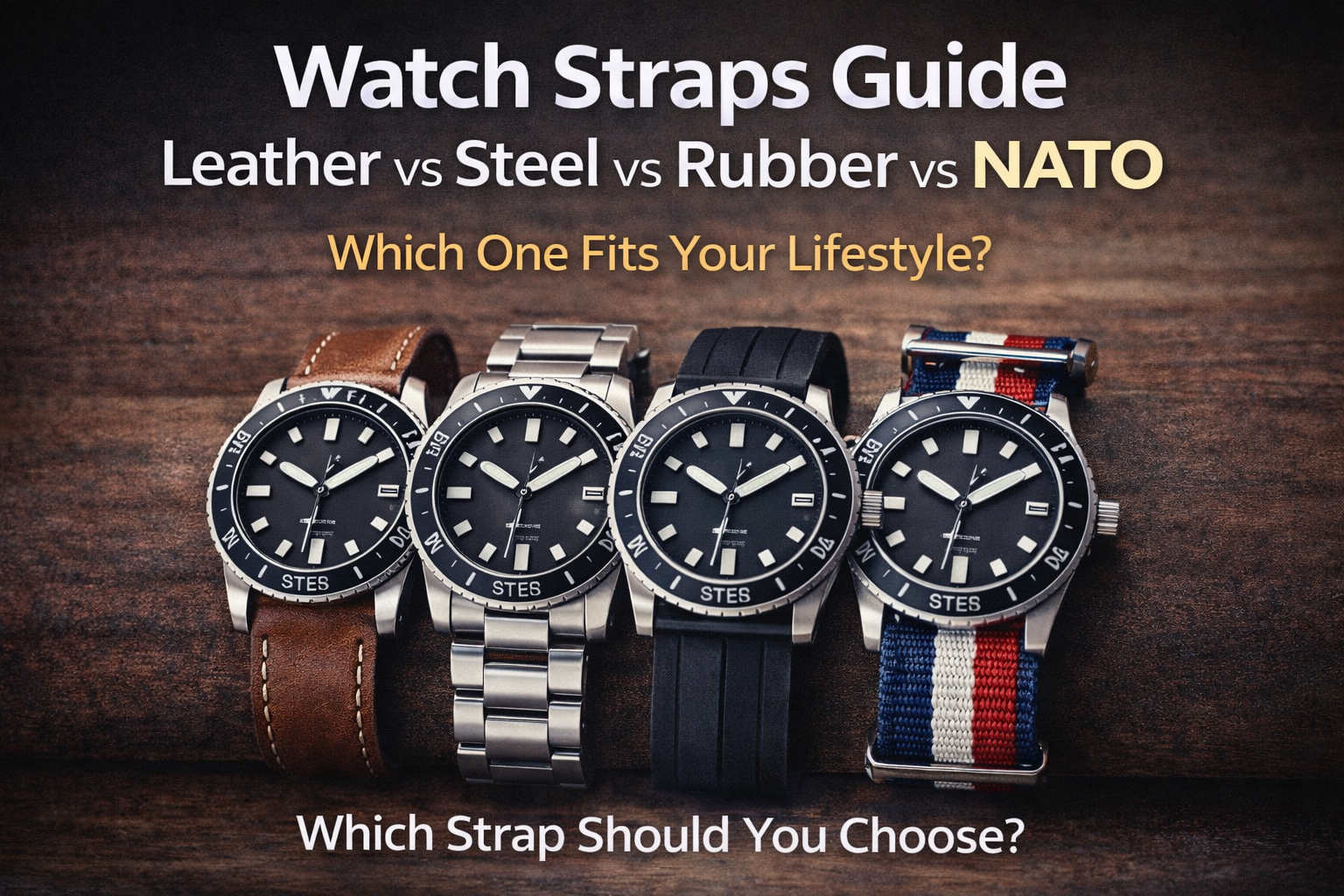
Choosing a watch is not just about the dial or the movement.
The strap (or bracelet) changes how a watch feels, how it looks, and how practical it is in daily life.
If you’ve ever bought a watch that looked amazing online but felt uncomfortable on your wrist, the strap was probably the reason.
In this guide, we’ll compare the four most common strap types — leather, stainless steel, rubber, and NATO — so you can pick the one that fits your lifestyle.
1) Why Watch Straps Matter More Than You Think
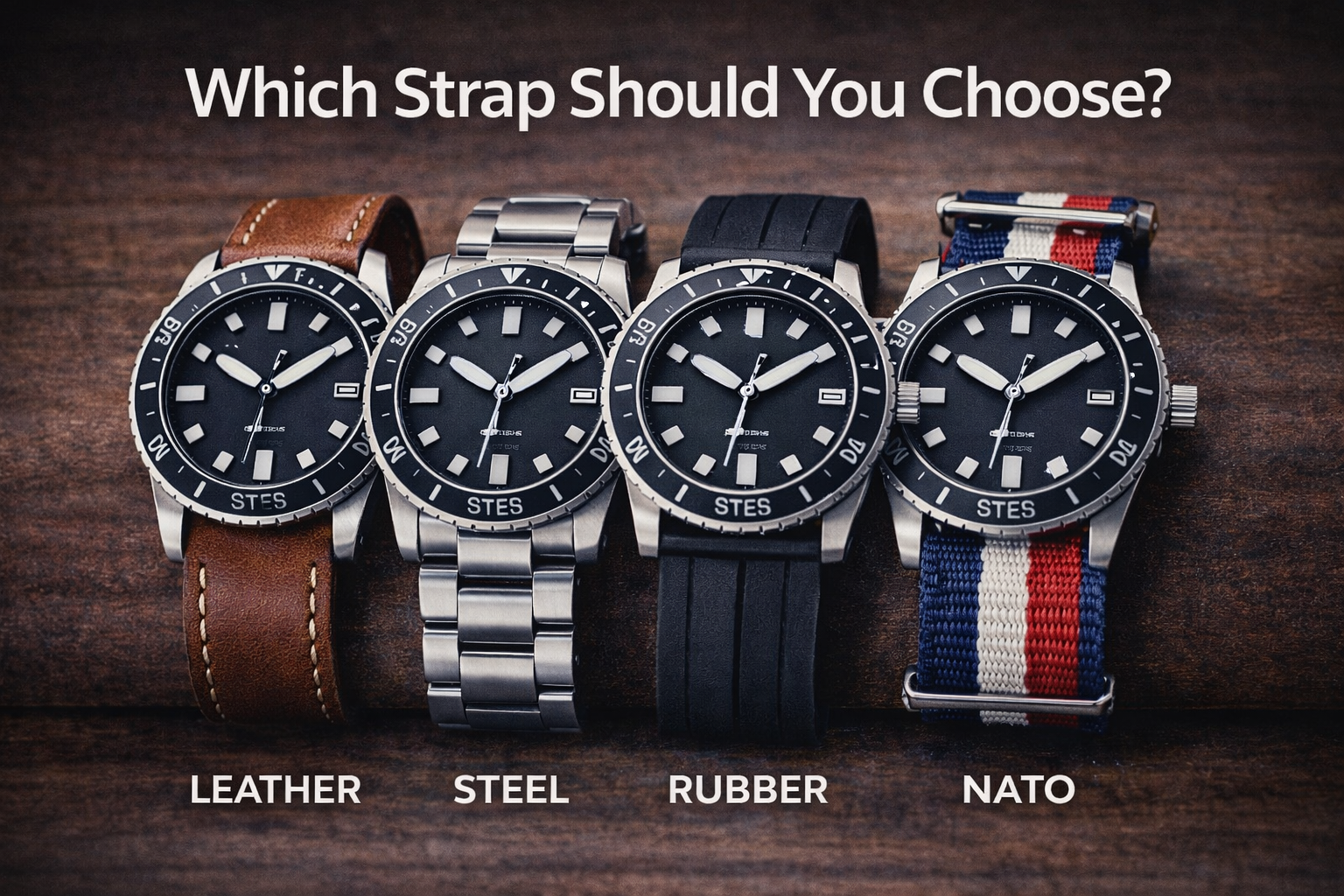
A strap affects:
-
Comfort: heat, sweat, wrist shape, weight balance
-
Durability: daily wear, friction, water exposure
-
Style: formal vs sporty vs casual
-
Practicality: cleaning, adjusting, replacing
If you’re still choosing your first watch, you may also like:
How to Choose Your First Watch: A Complete Beginner’s Guide
2) Leather Straps: Classic, Comfortable, Not Water-Friendly
Leather straps look premium and feel soft after a short break-in period.
They’re great for office wear, dates, and dressier outfits.
Best for:
-
Office / business casual
-
Dress watches
-
Cool or dry climates
Pros:
-
Lightweight and comfortable
-
Looks elegant and timeless
-
Usually affordable to replace
Cons:
-
Doesn’t handle water well (even a little moisture can shorten its lifespan)
-
Absorbs sweat and odor over time
-
Needs regular care to stay clean
Important tip: If your watch might get wet often, leather is usually the wrong strap choice.
(If you’re unsure what your watch can actually handle around water, read:
Watch Water Resistance Explained: 30m vs 50m vs 100m
3) Stainless Steel Bracelets: Durable, Versatile, Everyday-Friendly
A steel bracelet is one of the most practical options for daily wear. It’s strong, easy to clean, and works in many settings.
Best for:
-
Everyday wear
-
Hot climates
-
People who sweat easily
-
Anyone who wants low maintenance
Pros:
-
Long-lasting and tough
-
Easy to rinse and wipe clean
-
Works well with water-resistant watches
Cons:
-
Can feel heavy if you prefer lightweight watches
-
Needs proper sizing (links removed/added)
-
Cheap bracelets can pull arm hair or feel sharp
Sizing tip: A properly sized bracelet should feel secure but not tight. It should not leave deep marks on your wrist.
4) Rubber Straps: The Best Choice for Water and Sports
Rubber straps are designed for movement, sweat, and water.
If you want a “worry-free” daily strap, rubber is a top choice.
Best for:
-
Swimming / beach days
-
Gym and sports
-
Travel and summer wear
Pros:
-
Water-resistant and easy to clean
-
Comfortable in hot weather
-
Lightweight and flexible
Cons:
-
Can feel too sporty for formal outfits
-
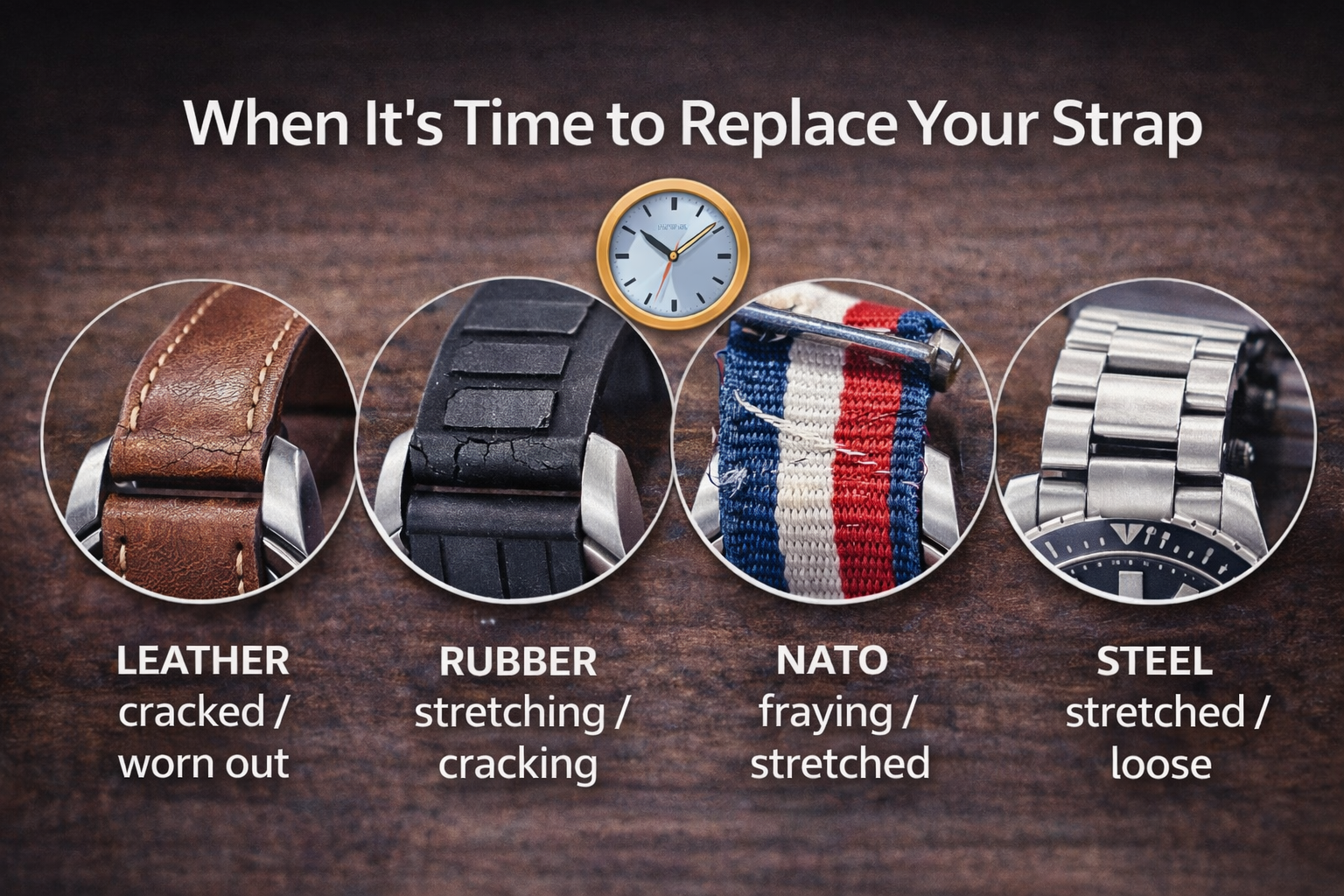
Lower-quality rubber can crack over time
-
Might attract dust depending on finish
Water tip: A rubber strap doesn’t make a watch water-safe — the watch rating still matters.
For a simple guide, see: Watch Water Resistance Explained
5) NATO Straps: Lightweight, Affordable, and Easy to Swap
NATO straps are popular because they’re comfortable, inexpensive, and easy to change. They also give a watch a casual, rugged vibe.
Best for:
-
Casual daily wear
-
Travel
-
People who like to change strap colors often
Pros:
-
Very comfortable and breathable
-
Easy to wash
-
Cheap and fun to collect
-
Extra security (strap runs under the case)
Cons:
-
Adds thickness under the watch (can feel tall)
-
Not ideal for dressy outfits
-
Fabric can stay wet longer than rubber
6) Quick Match Guide: Which Strap Fits Your Lifestyle?
If you want a simple answer, use this:
-
Office / formal: Leather
-
Everyday / low maintenance: Steel bracelet
-
Water / sports / summer: Rubber
-
Casual / travel / budget-friendly: NATO
If you’re buying online and want to avoid mistakes (wrong strap size, poor quality, misleading photos), read:
How to Buy a Watch Online Safely: The Complete Beginner Checklist
7) Strap Care Tips (So It Lasts Longer)
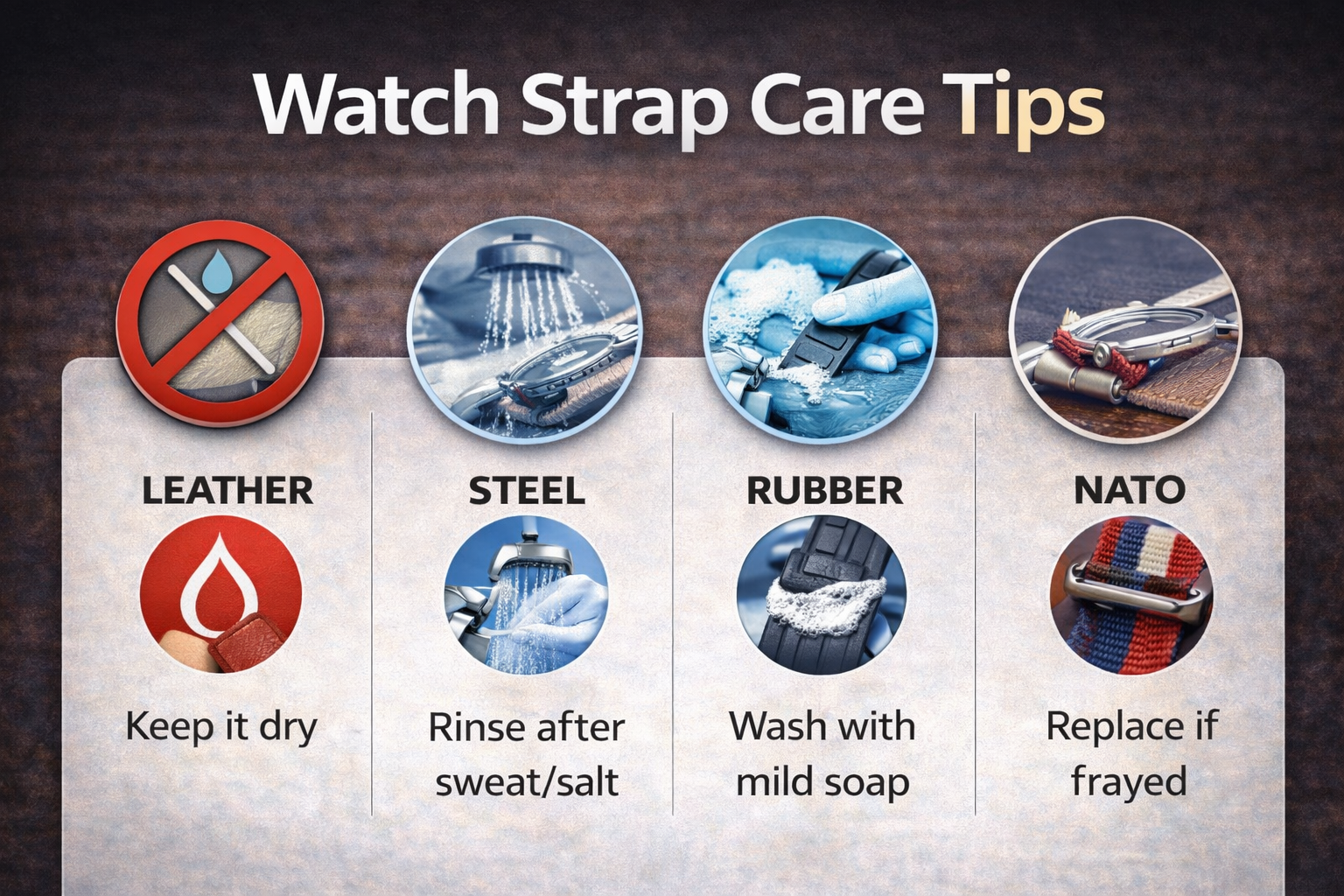
Leather care:
-
Avoid water exposure
-
Wipe after wearing
-
Let it dry naturally (no heat)
Steel bracelet care:
-
Rinse gently if exposed to sweat or salt
-
Use a soft cloth to dry
-
Occasional cleaning keeps it comfortable
Rubber care:
-
Rinse after beach/pool use
-
Avoid long exposure to harsh chemicals
NATO care:
-
Wash with mild soap and air dry
-
Replace if it frays or stretches too much
8) FAQ: Strap Size, Fit, and Common Mistakes
How do I know my strap size?
You need the lug width (usually 18mm, 20mm, or 22mm).
Most watches list it in specs. If not, measure the distance between the lugs.
Should I choose strap based on movement type?
Not directly — but lifestyle matters. If you wear an automatic daily, comfort is key.
If you’re comparing movements, see:
Mechanical vs Quartz Watches: Which Is Better for You? (internal link here)
Does strap choice affect accuracy?
Not the mechanism itself — but comfort affects how often you wear it.
If you care about what “normal accuracy” looks like, read:
Mechanical Watch Accuracy: What’s Normal? (+/- Seconds per Day)
Conclusion: The Best Strap Is the One You’ll Actually Enjoy Wearing
A strap can completely change your watch experience.
If you want a simple rule:
-
Choose steel for everyday durability
-
Choose rubber if water and sweat are part of your life
-
Choose leather for classic style (but keep it dry)
-
Choose NATO for comfort and casual versatility