What are you looking for?
Search
Watch Size Guide: Case Diameter, Lug-to-Lug & Thickness (How to Find the Perfect Fit)
Watch Size Guide: Case Diameter, Lug-to-Lug & Thickness (How to Find the Perfect Fit)
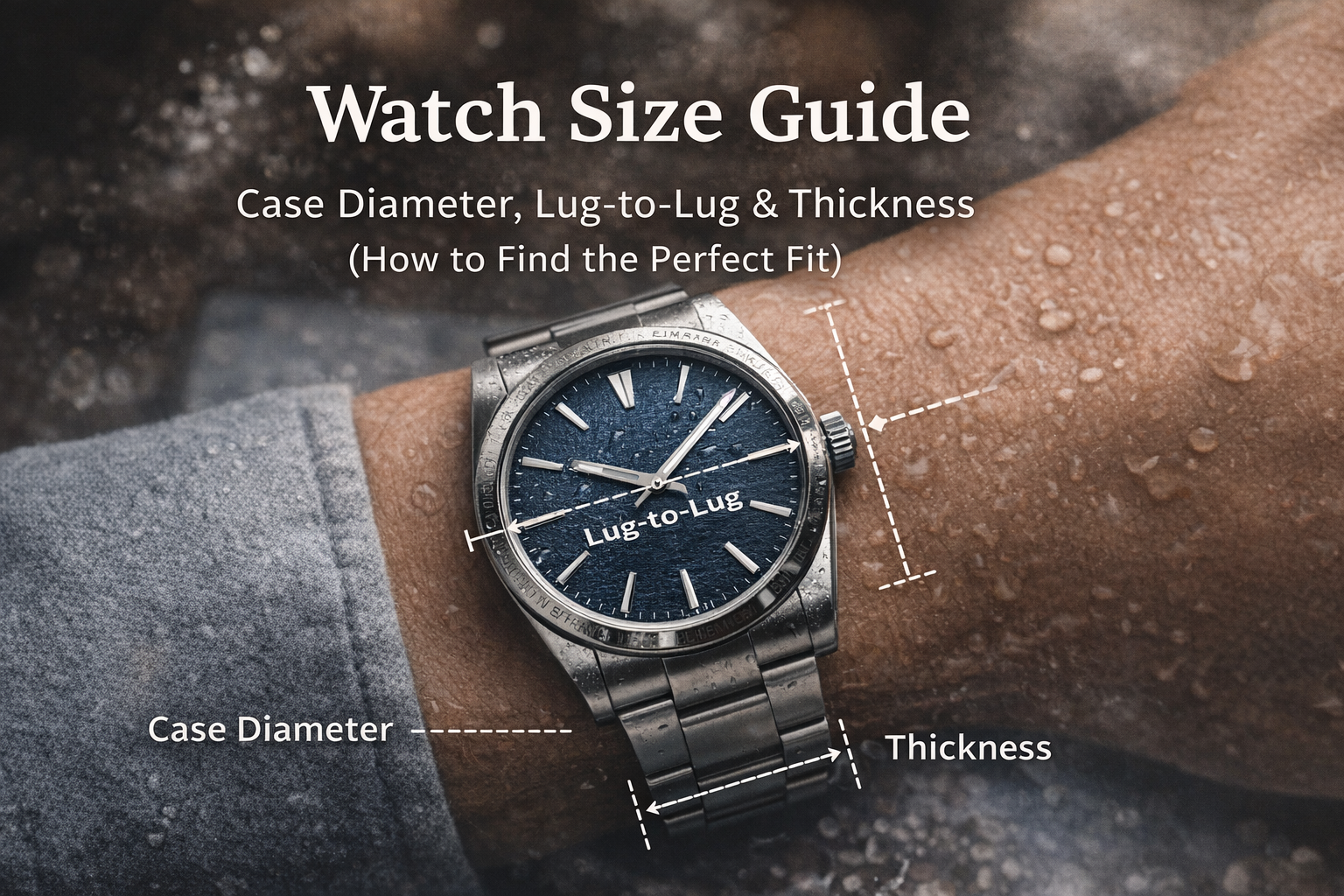
Buying a watch online can feel easy—until it arrives and looks too big, too small, or awkward on your wrist.
The truth is: case diameter alone doesn’t decide fit.
To get the perfect look and comfort, you need to understand three measurements that matter most:
-
Case diameter (the number everyone talks about)
-
Lug-to-lug (the number most people ignore)
-
Thickness (the detail that changes how “big” a watch feels)
This guide breaks it down in a simple, practical way—so you can choose a watch that looks balanced and feels right, even when shopping online.
Why Watch Size Matters More Than You Think
A watch that’s slightly off in size can:
-
Feel uncomfortable during daily wear
-
Slide around or pinch your wrist
-
Look “top-heavy” or oversized in photos
-
Catch on sleeves and jackets
If you’re choosing your first watch, size is one of the easiest ways to instantly make a watch look more expensive—or less.
If you’re still deciding what type of watch fits your lifestyle, start with our first watch buying guide.
The 3 Watch Measurements That Actually Decide Fit
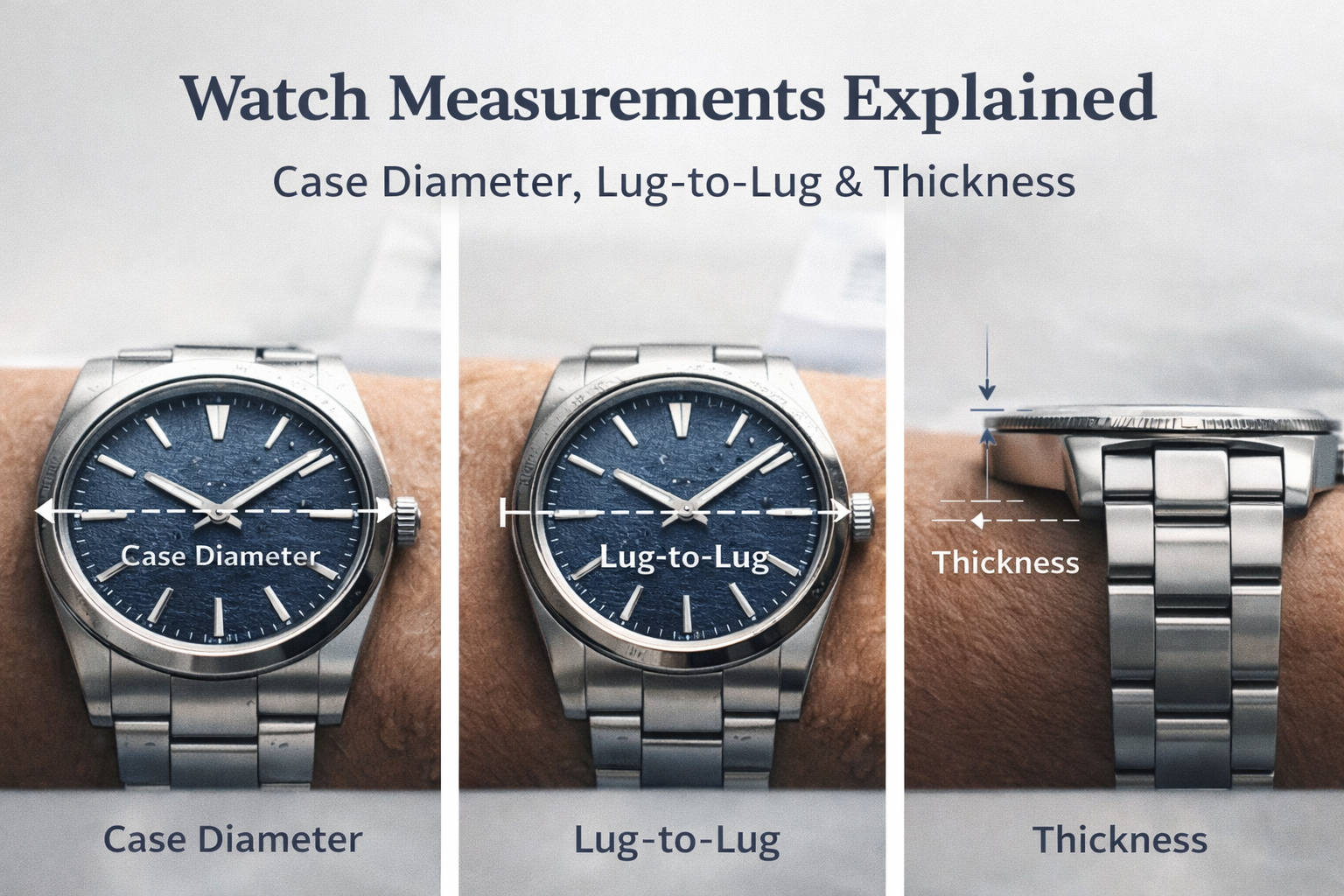
1) Case Diameter (The headline number)
Case diameter is measured across the watch case (usually in mm).
Common sizes:
-
34–36mm: classic / dressy / smaller wrists
-
37–40mm: most versatile for everyday wear
-
41–44mm: sportier presence, larger wrists or bold style
But diameter is only part of the story.
2) Lug-to-Lug (The most important measurement)
Lug-to-lug is the distance from the top lug tip to the bottom lug tip.
Why it matters:
-
Your wrist has a flat “top surface.”
-
If the lugs extend beyond that surface, the watch will look and feel too large—even if the diameter seems fine.
Rule of thumb:
Your lug-to-lug should usually be equal to or smaller than the flat width of your wrist.
3) Thickness (The “looks bigger” factor)
A thicker watch:
-
Sits taller on the wrist
-
Feels heavier
-
Looks larger in real life
-
Catches sleeves more easily
Simple guide:
-
6–9mm: slim (dress, minimal)
-
10–12mm: normal daily wear
-
13mm+: chunky sport/diver style presence
How to Measure Your Wrist Size (In 60 Seconds)
You can measure your wrist at home with:
-
A soft measuring tape, or
-
A strip of paper + ruler
Steps:
-
Wrap tape/paper around the wrist where you wear a watch
-
Mark the overlap point
-
Measure the length in cm or inches
Tip: measure snug, not tight.
Quick Watch Size Chart (Wrist Size → Best Fit Range)
Below is a practical range most beginners can rely on:
| Wrist Circumference | Recommended Case Diameter | Recommended Lug-to-Lug |
|---|---|---|
| 14–15.5 cm | 34–38 mm | ≤ 46 mm |
| 15.5–17 cm | 36–40 mm | ≤ 48 mm |
| 17–18.5 cm | 38–42 mm | ≤ 50 mm |
| 18.5–20 cm | 40–44 mm | ≤ 52 mm |
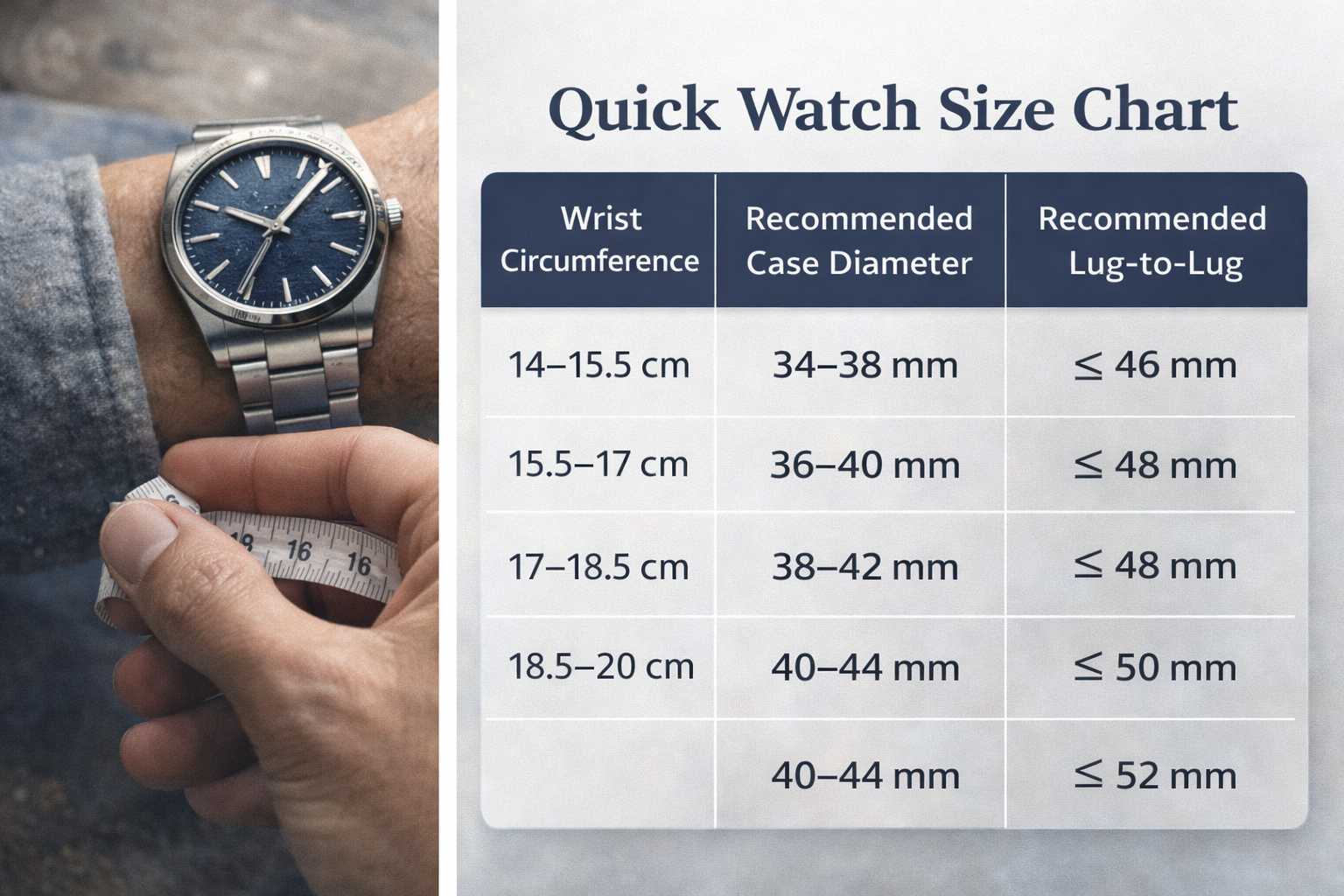
This is a comfort-first chart. Style preference matters too—some people like smaller classic fits, others prefer a modern oversized look.
Choosing Size by Style (Dress, Everyday, Sport)
Dress Watches (Clean + elegant)
Best look:
-
Slightly smaller case
-
Slim thickness
-
Shorter lug-to-lug
Good target:
-
34–39mm
-
6–10mm thickness
Everyday Watches (Balanced + wearable)
Best look:
-
Mid-size diameter
-
Moderate thickness
-
Lug-to-lug that stays inside your wrist edges
Good target:
-
36–41mm
-
9–12mm thickness
If you want a simple checklist for daily comfort, read our everyday watch selection guide.
Sport / Diver Watches (Bold + tool style)
Best look:
-
Larger case is okay, but keep lug-to-lug controlled
-
Thickness matters a lot (it changes comfort)
Good target:
-
40–44mm
-
12mm+ thickness (depending on taste)
Buying a Watch Online: Fit Checklist (Avoid Size Mistakes)
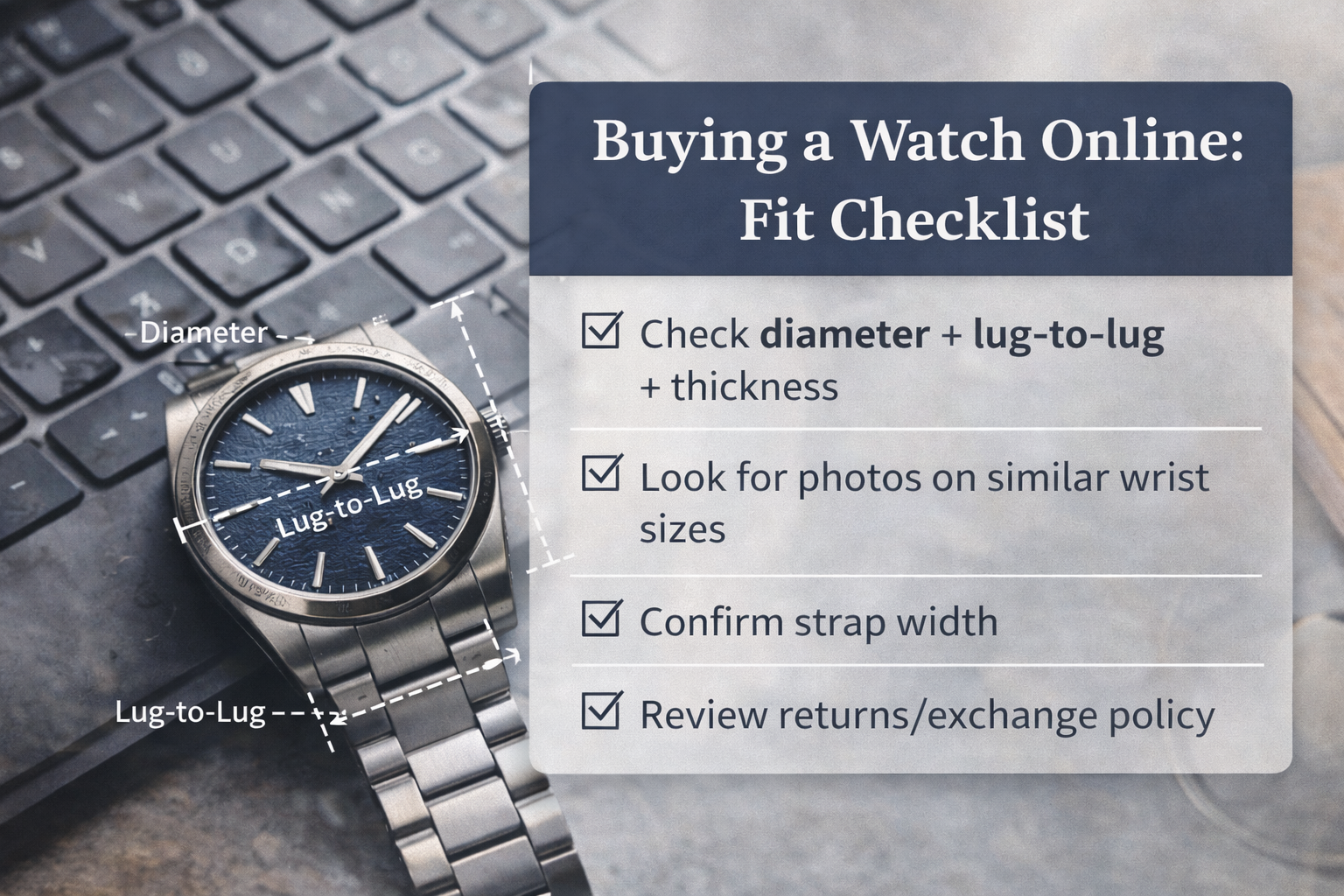
Before you buy:
-
Check diameter + lug-to-lug + thickness (not just diameter)
-
Look for photos on wrists similar to yours (wrist size matters)
-
Confirm strap width (changes comfort and proportion)
-
Review returns/exchange policy
Internal link insertion (place here): For a full step-by-step safety checklist, use our watch buying checklist for online orders.
Straps Change How Big a Watch Looks
A watch can look very different depending on the strap:
-
Steel bracelet: looks more substantial and integrated
-
Leather: classic and often looks slimmer
-
Rubber/NATO: casual, can add visual bulk
If you want to match comfort + style, check our watch strap guide.
FAQ: Watch Size Questions Beginners Always Ask
Is 40mm too big for a small wrist?
It depends on lug-to-lug and thickness.
A 40mm watch with short lugs can fit smaller wrists better than a 38mm watch with long lugs.
What matters more: diameter or lug-to-lug?
For comfort and fit, lug-to-lug usually matters more.
What thickness is best for everyday wear?
Most people find 9–12mm comfortable for daily wear and sleeves.
Why does the same size look different on different watches?
Case shape, bezel thickness, dial layout, lug length, and strap type all change the visual size.
Final Takeaway
If you remember only one thing from this guide, make it this:
✅ Diameter tells you the headline
✅ Lug-to-lug tells you the fit
✅ Thickness tells you how big it feels
Use the chart, check the three numbers, and you’ll avoid 90% of online sizing mistakes.