What are you looking for?
Search
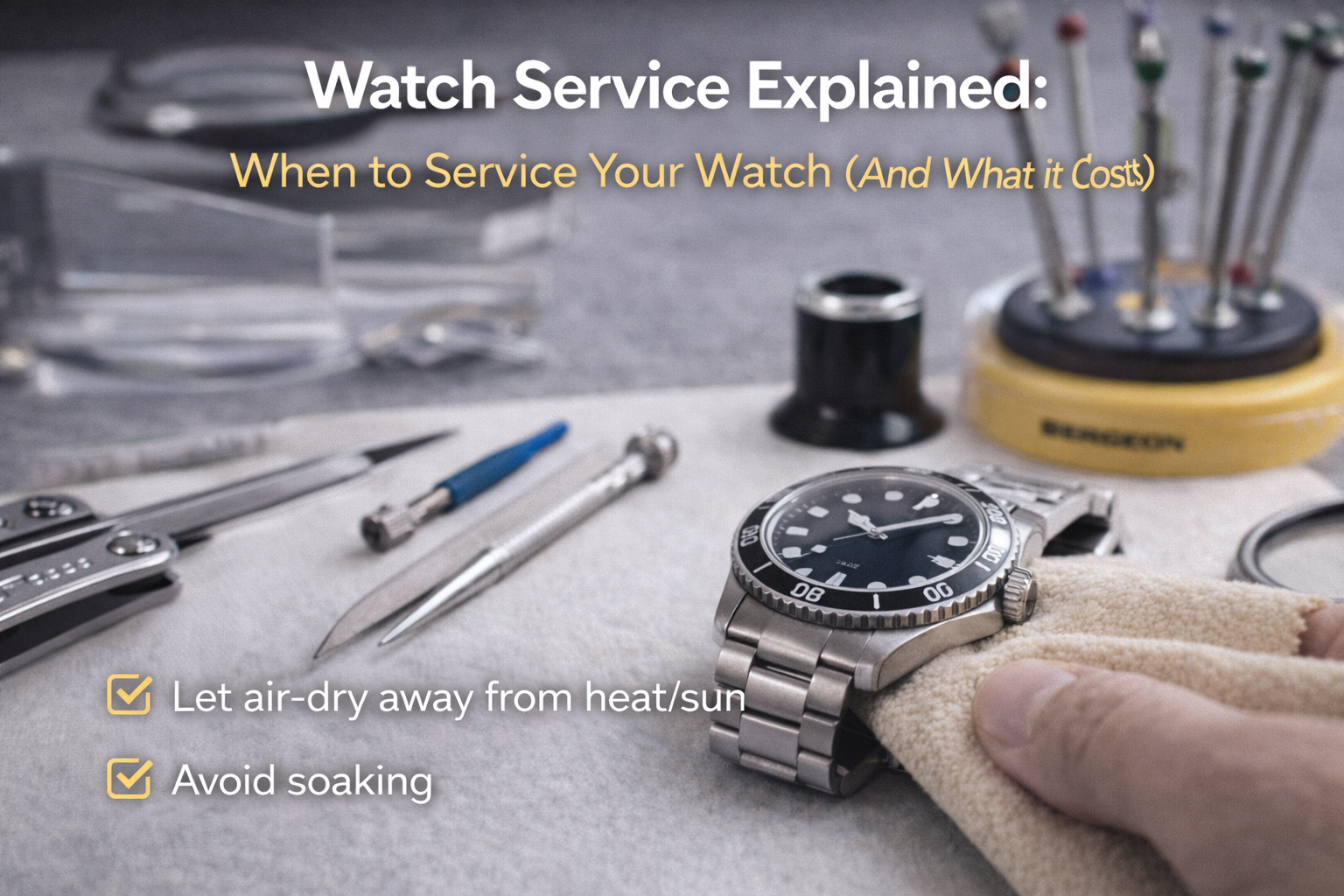
Watch Service Explained: When to Service Your Watch (And What It Costs)
Watch Service Explained: When to Service Your Watch (And What It Costs)
Introduction
A watch service sounds intimidating—until you understand what it actually is. Think of it like maintaining a car: lubrication dries out, parts wear, seals age, and accuracy can drift. Regular servicing prevents bigger, more expensive problems later.
In this guide, you’ll learn:
-
how often different watches need service
-
the warning signs you shouldn’t ignore
-
what a service typically includes
-
realistic cost ranges (and how to lower them)
1) What “Watch Service” Actually Means
A proper service isn’t just “cleaning the outside.” For mechanical watches, it usually involves:
-
disassembling the movement
-
cleaning old oils and debris
-
replacing worn parts if needed
-
re-lubricating with fresh oils
-
reassembling and regulating accuracy
-
testing functions and (often) water resistance
For quartz watches, service is often simpler—but still important (especially seals and battery-related issues).
2) How Often Should You Service a Watch?
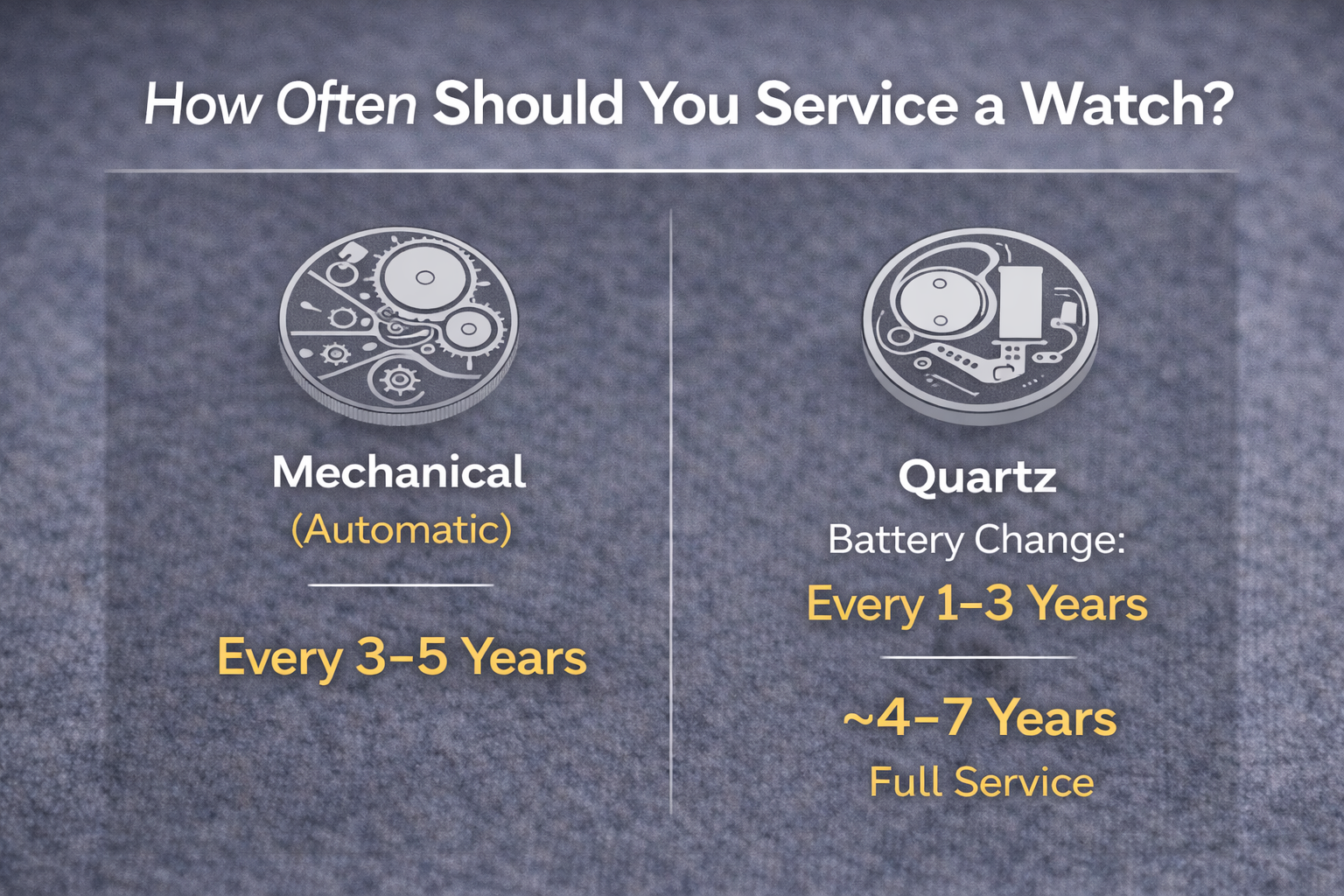
There isn’t one perfect schedule, but these guidelines work well:
Automatic / Mechanical Watches
-
Typical interval: every 3–5 years
-
If you wear it daily, lean closer to 3–4 years
-
If you rotate watches and store them well, 4–6 years can be reasonable
Quartz Watches
-
Battery change: usually every 1–3 years
-
Full service / gasket check: roughly every 4–7 years, depending on use
-
If you swim with it: check seals more often
If you’re comparing which movement type fits your lifestyle (and maintenance expectations), read: Mechanical vs Quartz Watches: Key Differences Explained.
3) Signs Your Watch Might Need Service Now
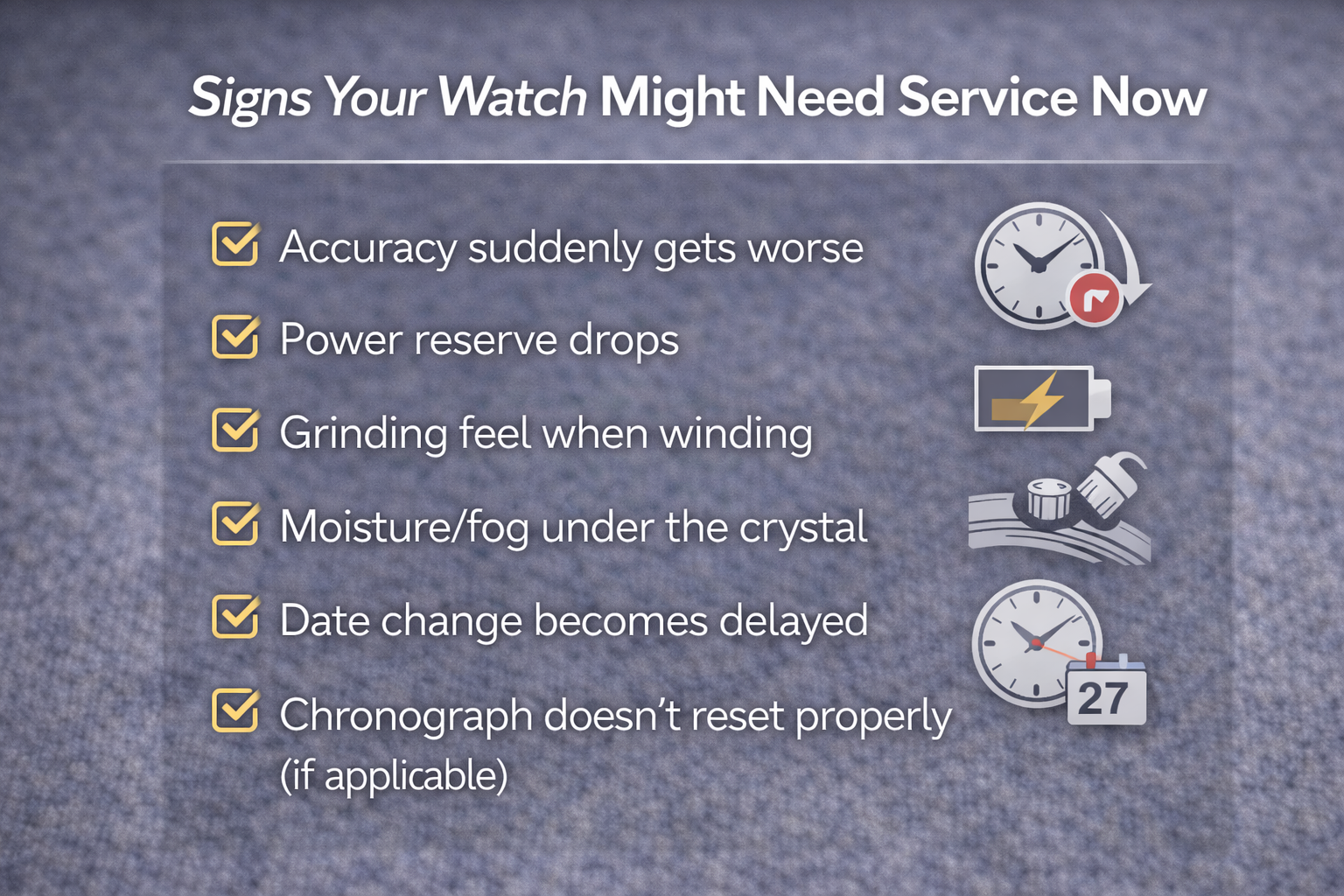
Even if you’re “not due,” service is smart if you notice:
-
Accuracy suddenly gets worse (gaining/losing far more than normal)
-
Power reserve drops noticeably (automatic stops sooner)
-
Grinding feel when winding or crown feels “rough”
-
Moisture/fog under the crystal
-
Date change becomes delayed or inconsistent
-
Chronograph doesn’t reset properly (if applicable)
For what’s normal vs not normal on timekeeping, use: Watch Accuracy: What’s Normal and How to Improve It.
4) Water Resistance and Service: The Hidden Reason People Get Damage
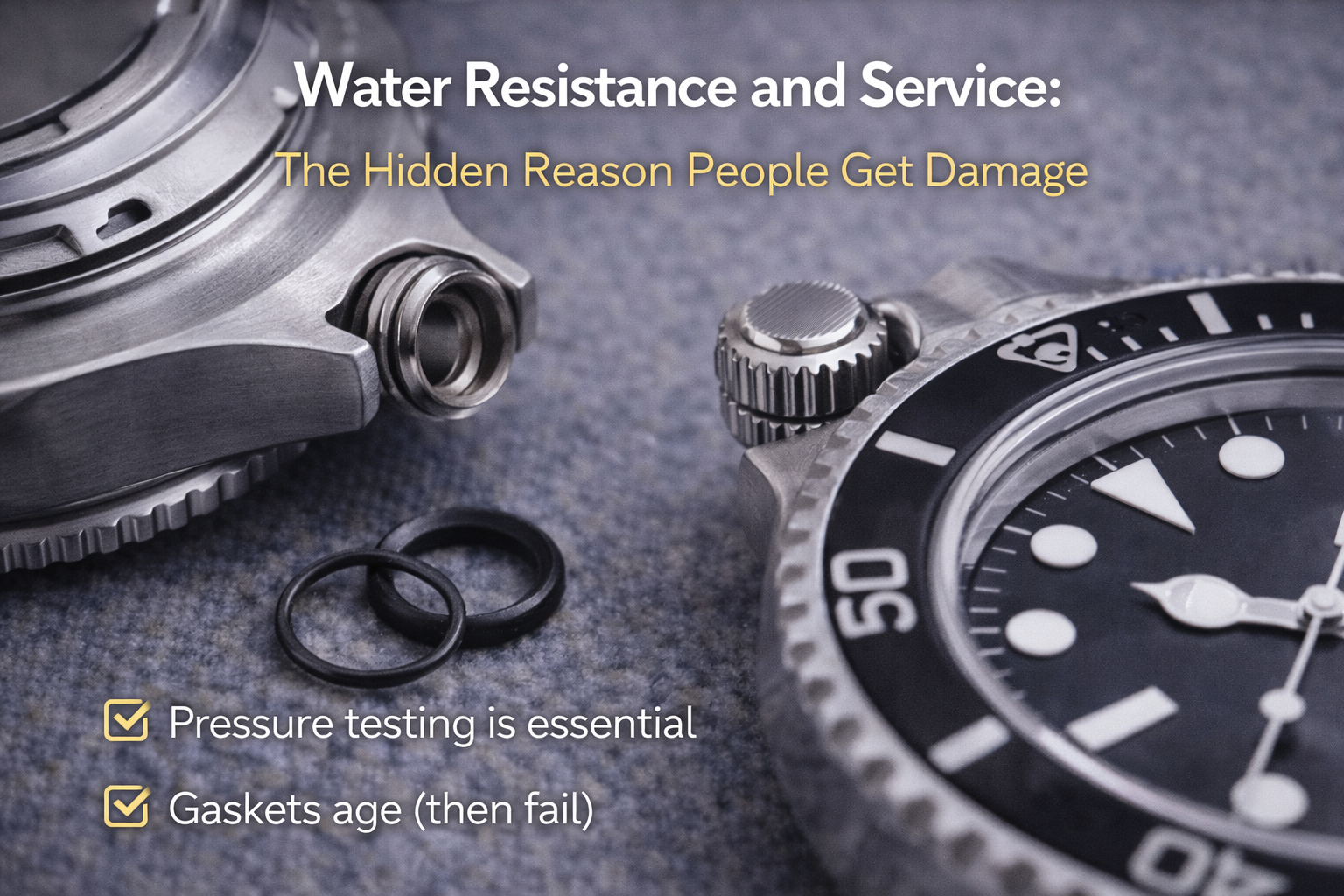
Many people assume water resistance is permanent—it isn’t. Seals age, crowns get knocked, and casebacks can loosen after battery changes.
If you ever expose your watch to water, it’s wise to:
-
pressure test periodically
-
replace gaskets when needed
-
avoid hot showers/steam
If you want the simple rating breakdown (30m vs 100m), see: Watch Water Resistance Explained: What 30m, 50m, 100m Really Mean.
5) What’s Included in a Typical Service?
What you get depends on the watch type and service level, but common inclusions are:
Mechanical service often includes:
-
movement disassembly + ultrasonic cleaning (parts only)
-
lubrication + reassembly
-
regulation for accuracy
-
gasket replacement
-
water resistance test (if applicable)
Quartz service often includes:
-
battery replacement
-
gasket check/replacement
-
cleaning contacts (if needed)
-
water resistance test (for water-ready models)
Note: A “service” is different from a “repair.” Repairs are usually done because something already failed.
6) Watch Service Cost Ranges (Realistic Expectations)
Prices vary by country, brand, and complexity, but here are realistic ranges:
Quartz (basic maintenance)
-
Battery + gasket check: ~$20–$80
-
More involved quartz service: ~$80–$200+
Automatic / Mechanical
-
Simple 3-hand mechanical: ~$200–$600
-
Dive/sport models (more sealing work): ~$300–$800
-
Chronographs / complicated movements: ~$600–$1,500+
Brand-authorized service centers tend to cost more than independent watchmakers.
7) How to Reduce Service Costs (Without Cutting Corners)
You can save money by preventing damage:
-
Keep the watch clean (grime accelerates wear on crowns/bracelets)
-
Avoid hot showers/steam
-
Store watches properly (dry + separated to avoid scratches)
-
Don’t operate crown/pushers underwater
-
Don’t leave dead batteries in quartz watches long-term
For safe home care, use: How to Clean a Watch Safely: Bracelet, Case, and Crystal (At Home Guide).
For storage habits that prevent moisture and scratches: How to Store Your Watches Properly: Avoid Scratches, Moisture, and Battery Damage.
8) Should You Service On a Schedule or Wait for Problems?
Best practice depends on how you use the watch:
-
Daily wear, water exposure, active lifestyle: follow a schedule
-
Occasional wear, stored carefully: you can stretch intervals slightly
-
High-value watch you want to keep long-term: schedule is safer than waiting
Waiting too long can increase wear and make the service more expensive.
9) Quick “Should I Service It?” Checklist
If you answer “yes” to any of these, it’s time to consider servicing:
-
Is accuracy noticeably worse than before?
-
Does the crown feel rough or inconsistent?
-
Have seals never been checked (and you get it wet)?
-
Has it been 5+ years since the last mechanical service?
-
Has a quartz watch had a dead battery sitting inside for months?
FAQ
Q1: Can I service a watch at home?
Basic cleaning is okay at home, but movement servicing requires tools, skills, and lubrication standards. Most people should use a watchmaker for full service.
Q2: Does servicing make a watch more accurate?
Often yes, especially if old oils dried out or regulation drifted. However, accuracy also depends on movement type and condition.
Q3: How do I know if my watch is water resistant “enough” after service?
Ask for (or request) a pressure test result. Seals should be replaced if needed.
Q4: Is it bad to wait until the watch stops?
For mechanical watches, waiting can increase wear and damage. Preventive servicing is usually cheaper than repairs.
Q5: How long does a watch service take?
It depends on the watchmaker’s workload and parts availability. Complex models typically take longer.