Watch Straps 101: How to Choose the Right Watch Band (Leather vs Rubber vs Metal)
Watch Straps 101: How to Choose the Right Watch Band (Leather vs Rubber vs Metal)
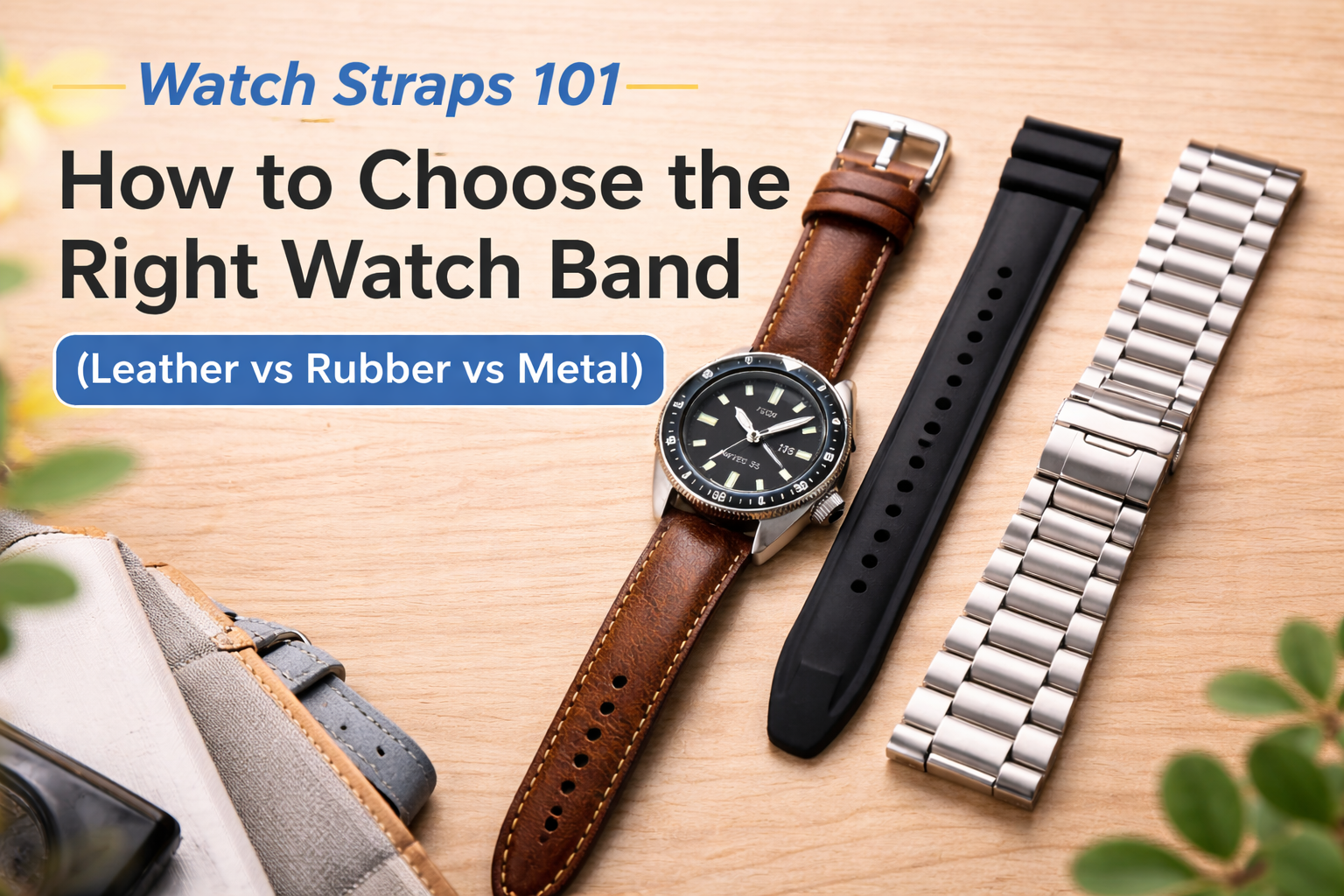
A watch can look perfect on the wrist—and still feel “wrong.”
Most of the time, the problem isn’t the watch head. It’s the strap.
The right watch band changes everything: comfort, style, durability, and even how expensive a watch looks. In this beginner-friendly guide, you’ll learn how to choose between leather straps, rubber straps, and metal bracelets, plus the key sizing details that help you avoid common mistakes.
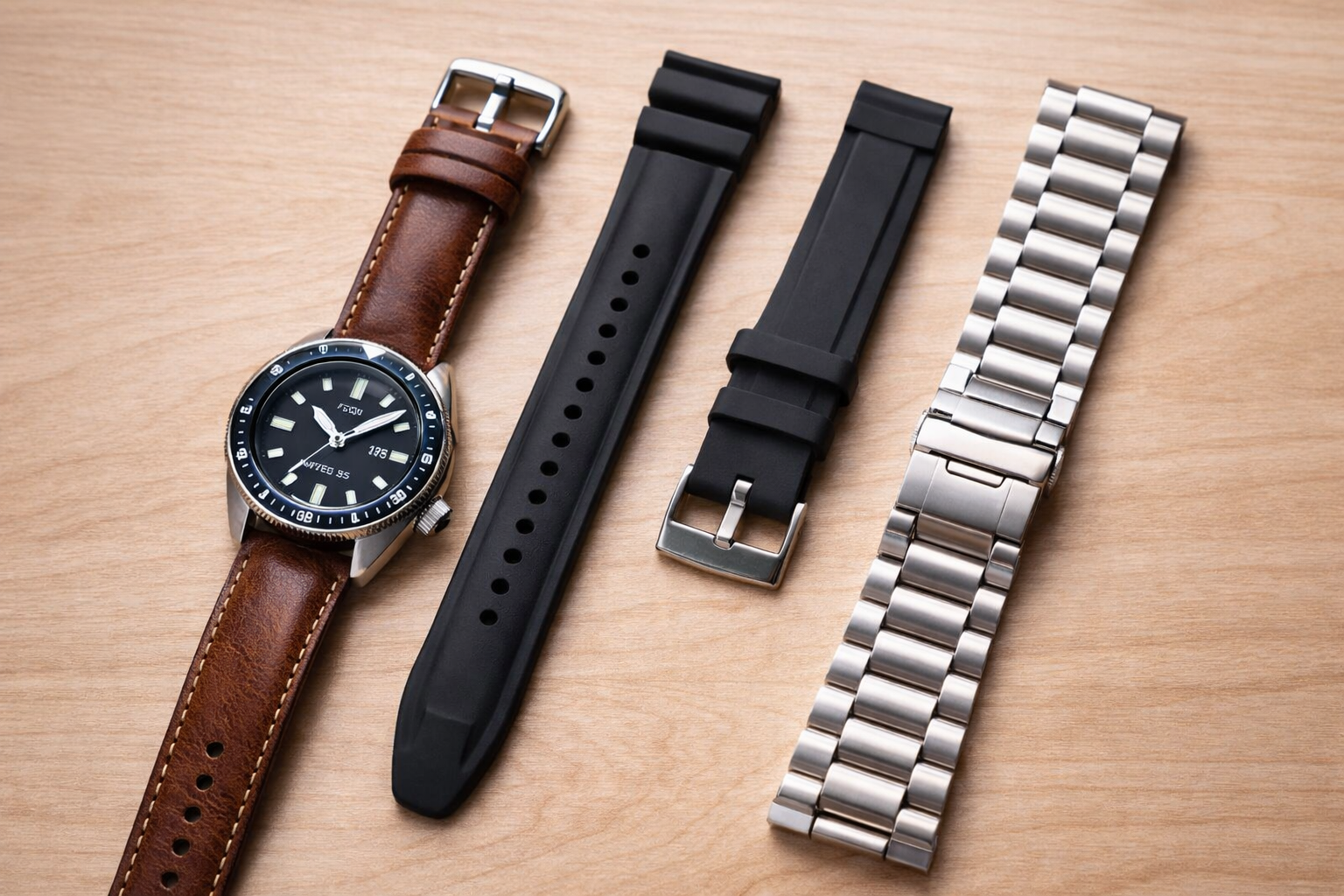
1) The 3 Main Types of Watch Bands (Quick Overview)
Before you choose, think about your daily life:
-
Leather strap: classic, dressy, comfortable—best for office and casual wear
-
Rubber strap: sporty, water-friendly, low maintenance—best for summer and active use
-
Metal bracelet: versatile, durable, premium feel—best for everyday “one-watch” setups
Let’s break them down.
2) Leather Straps: Timeless Style and Everyday Comfort
Leather is the most traditional watch strap choice. It instantly makes a watch look more refined.
Pros
-
Comfortable and flexible after break-in
-
Looks premium for business, dates, formal events
-
Huge variety (smooth, grained, suede, stitched)
Cons
-
Not ideal for water, sweat, or humid climates
-
Can crack or smell over time if not cared for
-
May discolor with heavy use
Best for
-
Office wear, smart casual outfits
-
Cooler climates
-
Watches you wear mostly indoors
Tip: If you sweat a lot, consider leather only in cooler seasons—or choose rubber for summer and swap straps later.
3) Rubber Straps: The Best Choice for Water, Heat, and Daily Abuse
Rubber straps are made for real-life wear: hot weather, workouts, rain, and travel.
Pros
-
Water-resistant and easy to clean
-
Great for summer and sweaty wrists
-
Comfortable for long wear (especially soft rubber)
Cons
-
Some rubber straps attract dust or lint
-
Cheaper rubber can feel stiff or smell
-
Not as dressy as leather
Best for
-
Summer, travel, sports, beach, daily commuting
-
Watches with strong water resistance (divers, sporty models)
Strap rule of thumb: If you’re reading your watch water resistance guide often, rubber is probably your best default.
4) Metal Bracelets: Durable, Versatile, and Premium-Looking
A metal bracelet (steel, titanium, etc.) is the most “all-round” option for many people.
Pros
-
Long-lasting and tough
-
Looks premium and matches most outfits
-
Works in most climates and conditions
Cons
-
Can feel heavy (especially on smaller wrists)
-
Needs sizing (links removed/added)
-
Can pull arm hair if poorly fitted
-
Scratches are normal over time
Best for
-
Everyday wear if you want one strap for everything
-
People who prefer a heavier, solid feel
-
Work environments where straps get bumped a lot
Good to know: Light scratches on bracelets are normal. They’re part of real wear—like patina on leather.
5) The Most Important Fit Detail: Lug Width (Don’t Skip This)
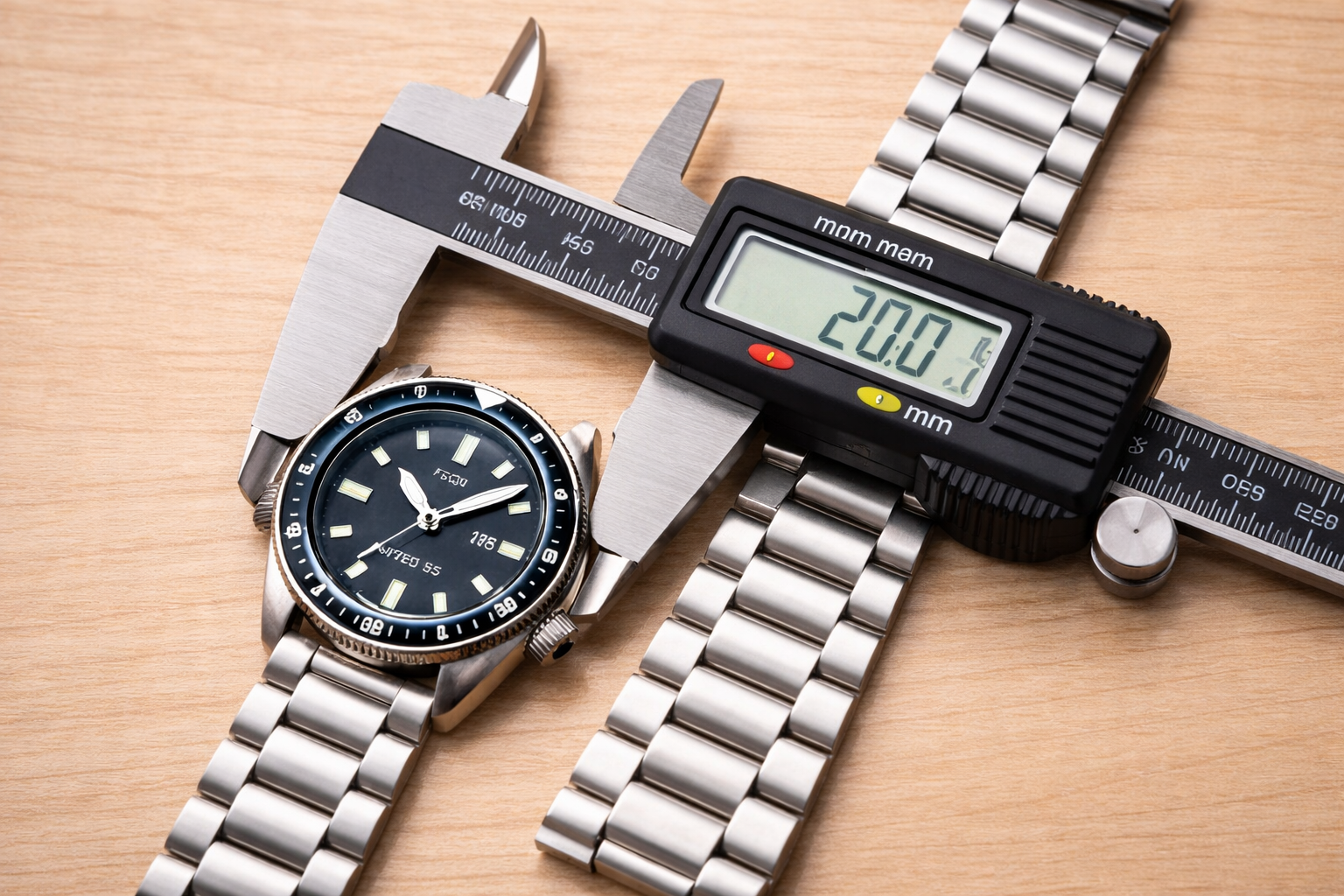
If you buy straps online, lug width is the number you must get right.
What is lug width?
It’s the distance (in mm) between the two lugs where the strap attaches to the watch case.
Common sizes: 18mm, 20mm, 22mm
How to measure
-
Use a ruler or caliper
-
Measure the inner gap between lugs
-
Always measure in millimeters
If you choose the wrong lug width, the strap will either:
-
not fit at all, or
-
fit loosely and look cheap
6) Strap Length: How to Avoid “Too Long” or “Too Short”
Even with correct lug width, a strap can fit poorly if the length is wrong.
Strap length depends on:
-
wrist circumference
-
watch case size and thickness
-
how you like it worn (tight vs relaxed)
Typical adult strap length ranges:
-
Short: smaller wrists
-
Standard/Regular: most wrists
-
Long: larger wrists or thicker watches
If your strap tail sticks out too far, try a shorter length or a strap with more holes near the buckle.
7) Match the Strap to Your Lifestyle (Simple Picks)
If you don’t want to overthink it, use this:
If you want a “one watch for everything”
✅ Metal bracelet (best all-rounder)
If you live in a hot climate or sweat easily
✅ Rubber strap (comfort + low maintenance)
If you mainly wear the watch for style / office / dates
✅ Leather strap (instant upgrade)
If you travel often
✅ Rubber strap or bracelet (more durable, easier to maintain)
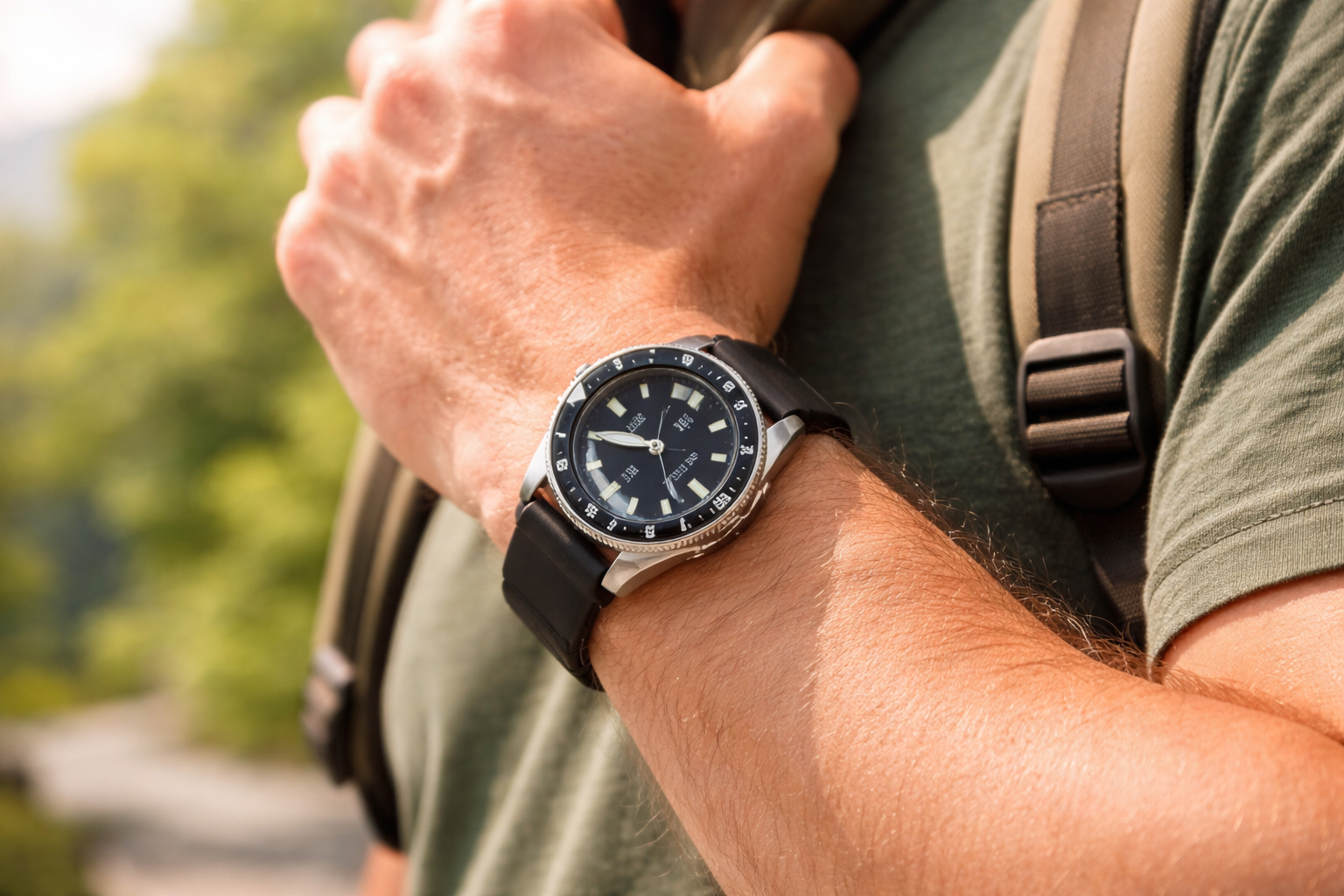
8) Common Mistakes Beginners Make
-
Choosing style over comfort
A strap that looks great but feels annoying will end up in a drawer. -
Ignoring water and sweat
Leather + sweat = faster wear and possible odor. -
Buying the wrong lug width
Always check before ordering. -
Wearing the strap too tight
This causes discomfort and increases wear. Your skin should breathe. -
Not considering wrist size vs watch size
Big watch + thick strap can overwhelm smaller wrists (and the opposite can look “tiny”).
9) Quick Care Tips (So Your Strap Lasts Longer)
Leather
-
Keep dry when possible
-
Wipe gently with a clean cloth
-
Avoid soaking, showers, heavy sweat days
Rubber
-
Rinse with water after beach/sweat
-
Mild soap is fine
-
Dry fully before storing
Metal bracelet
-
Clean with soft brush + mild soap occasionally
-
Dry thoroughly
-
Expect scratches—normal and unavoidable
Final Recommendation (Simple Decision)
-
Want classic style? Choose leather
-
Want easy daily wear + water safety? Choose rubber
-
Want durability + premium versatility? Choose metal bracelet
If you’re building a small collection, the best strategy is simple:
Bracelet for daily wear + Rubber for summer + Leather for dress days.