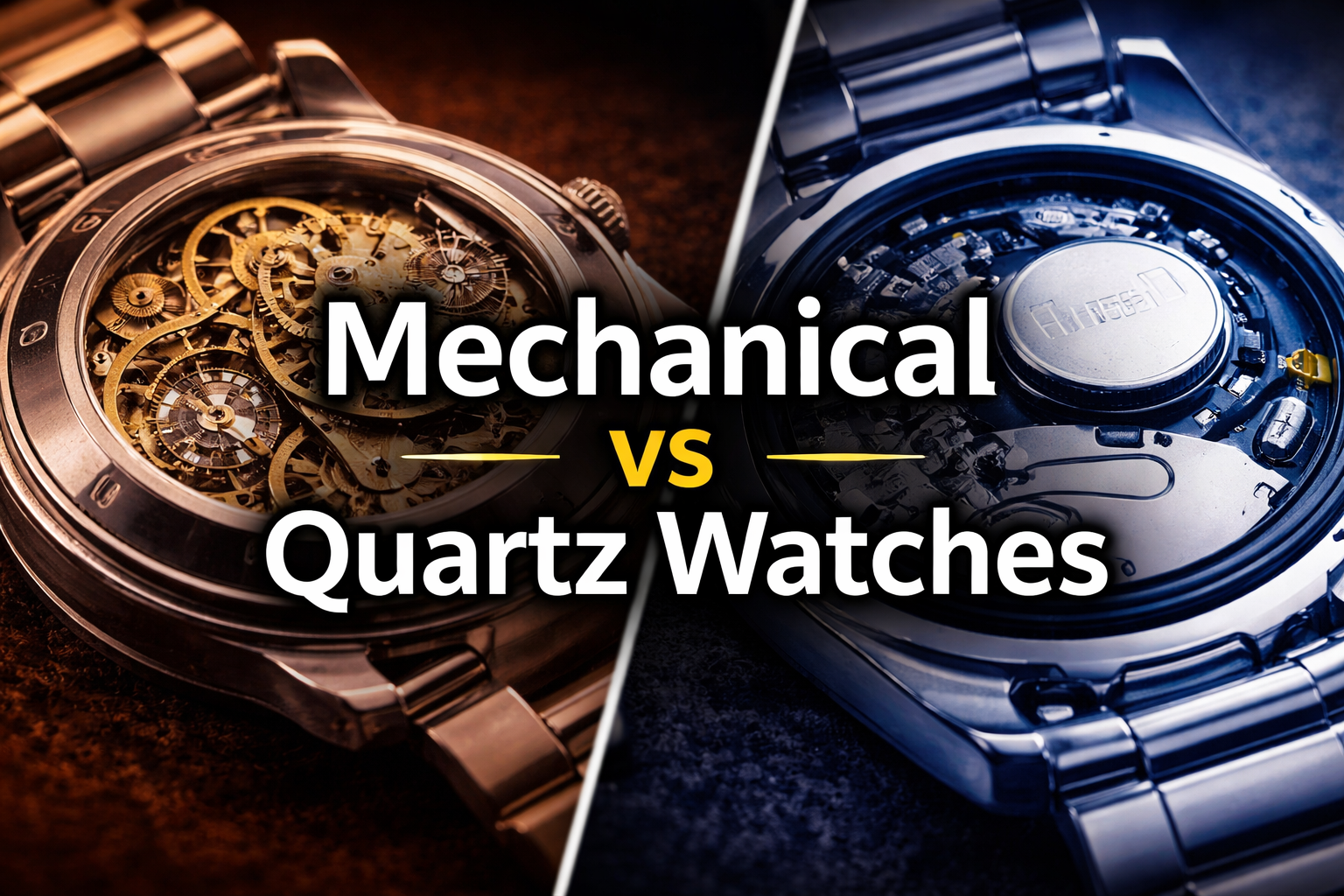
Mechanical vs Quartz Watches: Which Is Better for You?
🕰️ Introduction
If you’re new to the world of watches, one of the first questions you’ll encounter is:
“Should I buy a mechanical or a quartz watch?”
But before diving into movements, it’s also worth understanding how watch designs differ — especially the debate between Replica vs Homage Watches
At first glance, they might look similar. Both tell time, both can be stylish, and both come in all shapes and price ranges.
But underneath the dial, they’re powered by two completely different technologies — and that difference affects everything from accuracy to price and maintenance.
In this article, we’ll help you understand what separates mechanical and quartz watches, their pros and cons, and which one is the right fit for you.
⚙️ What Is a Mechanical Watch?
A mechanical watch is the oldest form of watchmaking technology, dating back to the 16th century.
It works without any electronics or batteries — instead, it uses a tightly wound mainspring that gradually releases energy to power the gears and hands.
There are two main types:
-
Manual Mechanical Watches – You wind them by hand every 1–2 days.
-
Automatic Watches – They wind themselves as you move your wrist, thanks to a small rotor inside.
✅ Advantages of Mechanical Watches
-
Craftsmanship & Heritage – Each movement contains hundreds of tiny parts assembled by skilled watchmakers.
-
Longevity – With regular servicing, a mechanical watch can last decades or even generations.
-
Smooth Movement – The sweeping second hand is a hallmark of mechanical watches.
-
Emotional Value – For collectors, a mechanical watch represents art, tradition, and engineering.
⚠️ Disadvantages of Mechanical Watches
-
Less Accurate – Typically loses or gains 10–20 seconds per day.
-
Requires Maintenance – Needs servicing every 3–5 years.
-
Sensitive to Shocks & Magnetism – Can affect accuracy.
-
Higher Cost – Quality movements are expensive to make.
🔋 What Is a Quartz Watch?
Introduced in 1969 by Seiko, quartz watches revolutionized the watch industry.
They use a tiny quartz crystal and a battery to regulate time electronically.
When electricity passes through the crystal, it vibrates at a precise frequency (32,768 times per second), ensuring exceptional accuracy.
✅ Advantages of Quartz Watches
-
Superior Accuracy – Deviates only a few seconds per month.
-
Low Maintenance – Just change the battery every 1–2 years.
-
Affordable – Quartz movements are cheap to produce, making them ideal for everyday use.
-
Durability – Better resistance to shocks, magnetism, and temperature changes.
⚠️ Disadvantages of Quartz Watches
-
Shorter Lifespan – Electronic parts can degrade after 10–15 years.
-
Less “soul” – Many enthusiasts consider them less romantic or artistic.
-
Ticking Second Hand – Unlike the smooth sweep of mechanical watches, the second hand “ticks” once per second.
🧩 Mechanical vs Quartz: Key Differences
| Feature | Mechanical Watch | Quartz Watch |
|---|---|---|
| Power Source | Wound mainspring | Battery |
| Accuracy | ±10–20 seconds per day | ±15 seconds per month |
| Maintenance | Requires servicing every 3–5 years | Minimal — battery change only |
| Durability | Sensitive to magnetism & shock | More resistant |
| Lifespan | Can last generations | 10–20 years typical |
| Price Range | $200–$10,000+ | $20–$1,000 |
| Second Hand Motion | Smooth sweep | 1-second tick |
| Emotional Appeal | High — craftsmanship & legacy | Practical — reliability & simplicity |
🔧 Which One Should You Choose?
The choice between a mechanical and a quartz watch ultimately depends on your lifestyle and preferences.
💎 Choose a Mechanical Watch If:
-
You appreciate craftsmanship and tradition.
-
You enjoy the ritual of winding or maintaining a watch.
-
You see watches as long-term investments or heirlooms.
-
You love the visual beauty of a mechanical movement.
Examples: Seiko Presage, Tissot Le Locle, Orient Bambino, or entry-level Swiss automatics.
⚡ Choose a Quartz Watch If:
-
You value accuracy and convenience.
-
You prefer a low-maintenance timepiece for daily wear.
-
You want something affordable, durable, and reliable.
-
You don’t want to worry about winding or servicing.
Examples: Casio, Citizen Eco-Drive, Seiko Quartz, Timex Weekender.
🧠 The Watch Enthusiast’s Perspective
Among watch collectors, mechanical watches often hold emotional value — they represent human craftsmanship and the “heartbeat” of horology.
Quartz watches, meanwhile, represent precision and practicality.
Neither is objectively “better.”
In fact, many enthusiasts own both — a mechanical watch for weekends or formal occasions, and a quartz for daily use or travel.
Think of it this way:
💬 A mechanical watch is art you can wear; a quartz watch is time you can trust.
🔗 Related Reading
If you enjoyed this comparison, check out:
👉 Replica vs Homage Watches: Understanding the Key Differences
These two articles together form the perfect foundation for anyone starting their watch journey — understanding both the mechanics and design inspirations behind timepieces.
🔚 Conclusion
Both mechanical and quartz watches have their strengths — one celebrates tradition, while the other embraces technology.
When choosing between them, consider what you value most:
-
⏱️ Accuracy & convenience? → Go quartz.
-
⚙️ Craftsmanship & legacy? → Go mechanical.
Either way, every watch tells more than just time — it tells your story.
✍️ Author
RR Watch Editorial Team
📄 Author Bio
The RR Watch Editorial Team consists of passionate writers and enthusiasts dedicated to helping readers understand the world of horology — from mechanical movements to modern quartz innovations.