Watch Water Resistance Explained: 30m vs 50m vs 100m (What You Can Actually Do)
Watch Water Resistance Explained: 30m vs 50m vs 100m (What You Can Actually Do)
Water resistance is one of the most misunderstood watch specs.
Many people assume “30m” means you can swim 30 meters deep — but that’s not how it works.
This guide explains what common ratings (30m / 50m / 100m / 200m) actually mean in daily life, what activities are safe, and the habits that most often cause leaks.
1) What “Water Resistance” Really Means
A watch’s water resistance rating is based on lab tests under controlled conditions.
In real life, pressure changes quickly due to movement, temperature shifts, and water impact (like jumping into a pool or a strong shower stream).
So the rating is best treated as a practical guideline, not a guarantee.
How to Buy a Watch Online Safely: The Complete Beginner Checklist
2) Water Resistance Ratings: What You Can Actually Do
Here’s the simplest real-world interpretation:
30m / 3 ATM — “Splash Resistant”
Usually safe for:
-
Hand washing
-
Light rain
-
Accidental splashes
Avoid:
-
Showering
-
Swimming
-
Any immersion
✅ Best for: dress watches or daily wear if you’re careful.
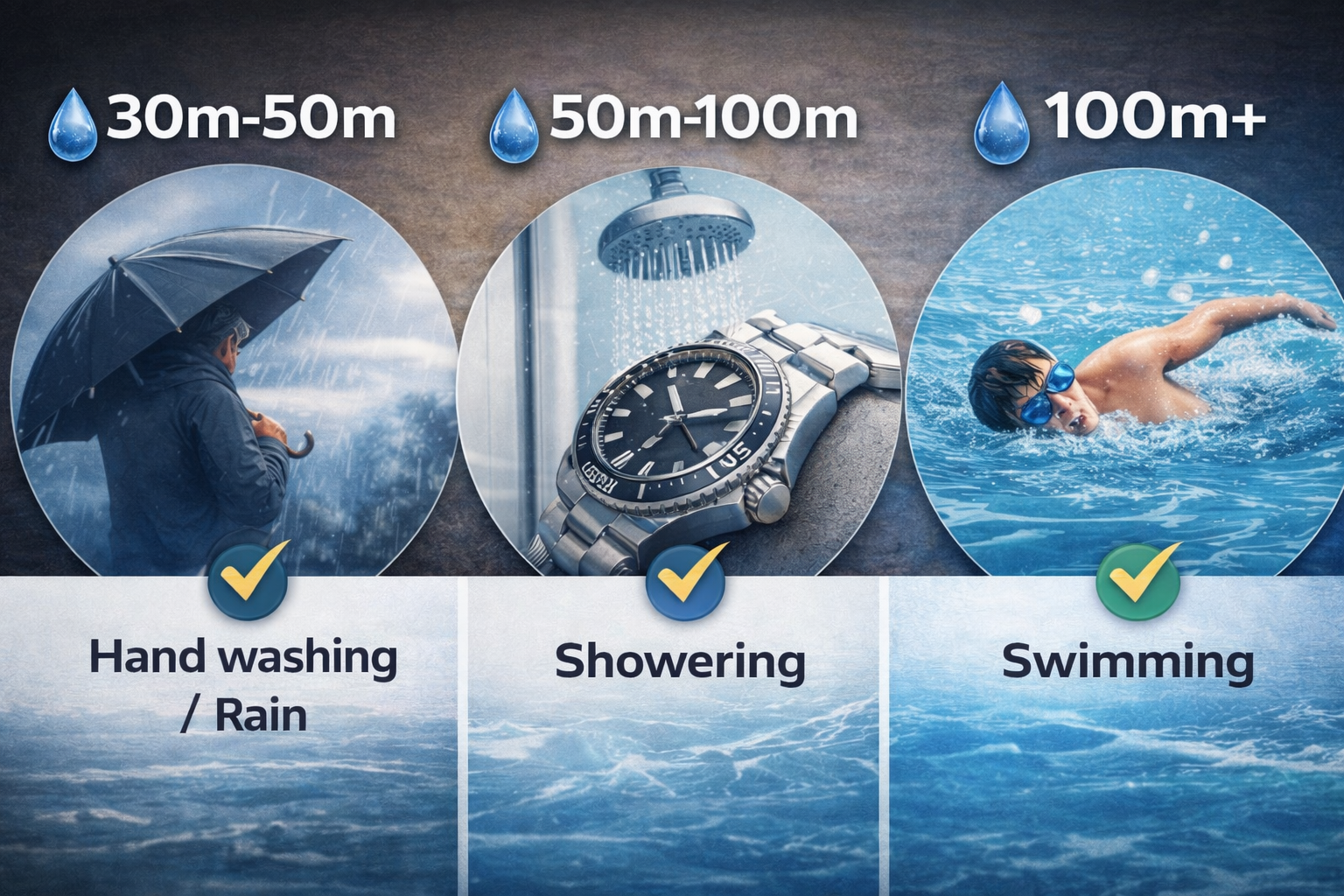
50m / 5 ATM — “Light Water Contact”
Usually safe for:
-
Hand washing
-
Rain
-
Quick rinse (carefully)
-
Very light exposure around water
Avoid:
-
Swimming laps
-
Hot showers/saunas
-
Water sports
✅ Best for: everyday wear if you occasionally get caught in rain or wash hands often.
100m / 10 ATM — “Swimming Safe (Most Cases)”
Usually safe for:
-
Pool swimming
-
Snorkeling (light)
-
Beach use (basic)
Avoid:
-
Diving
-
High-impact water sports (unless designed for it)
-
Hot water exposure
✅ Best for: people who want a “worry-free” daily watch.
200m / 20 ATM — “Water Sports + Strong Protection”
Usually safe for:
-
Swimming
-
Snorkeling
-
Water sports
-
Stronger real-world use
✅ Best for: sport watches, dive-style watches, and active lifestyles.
3) The Biggest Water Resistance Mistakes (That Cause Leaks)
Even a watch rated 100m can leak if you do these:
Mistake #1: Using the crown underwater
If you pull the crown out to set time or date while the watch is wet, water can enter instantly.
Rule: never adjust the crown when the watch is wet.
Mistake #2: Hot showers & saunas
Heat can expand seals and weaken gaskets. Steam is also tricky — it can push moisture into tiny gaps.
Rule: avoid hot showers and saunas unless the watch is specifically designed for it.
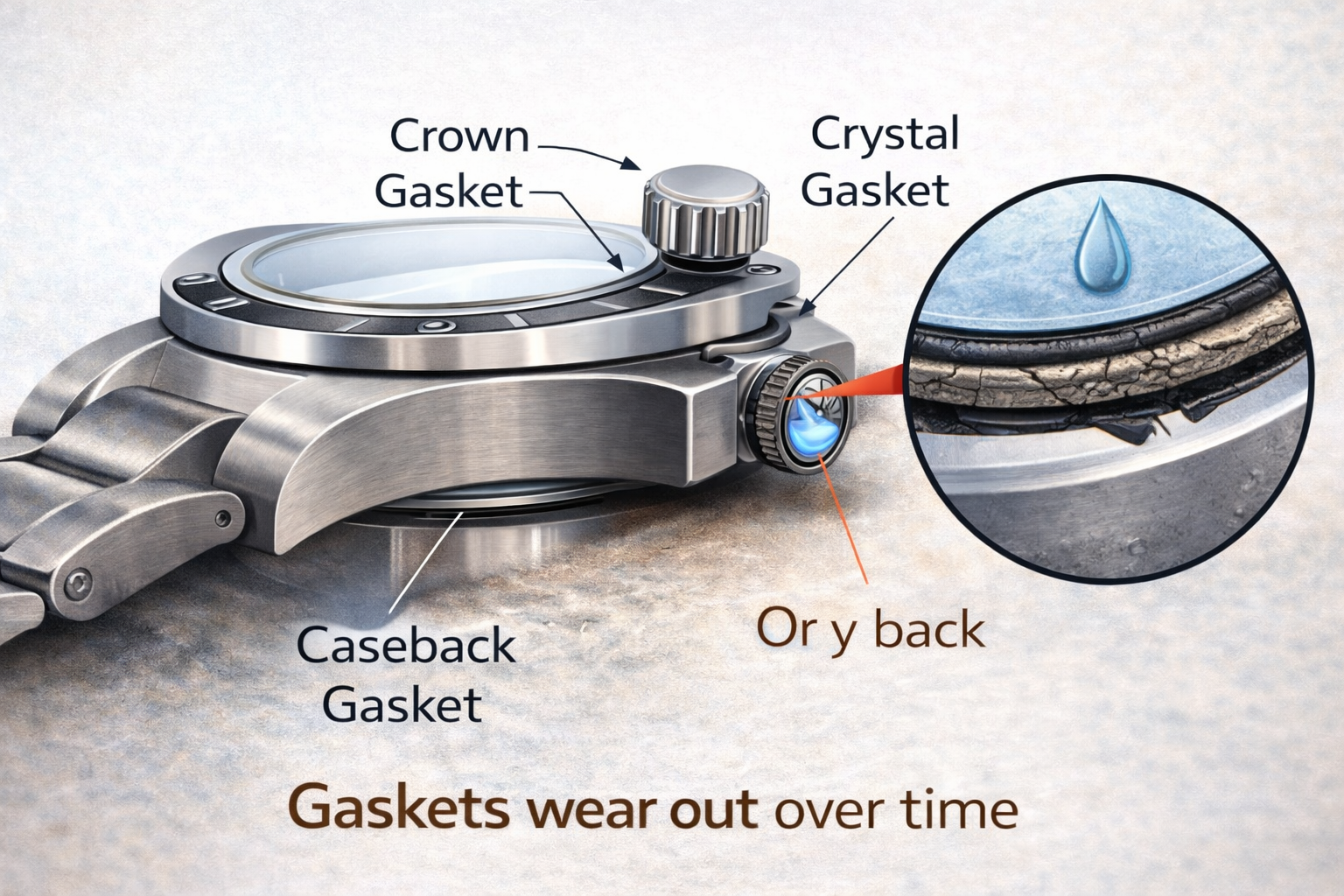
Mistake #3: Old gaskets and dry seals
Water resistance is not permanent. Gaskets wear out over time, especially if the watch is exposed to:
-
heat
-
sweat
-
saltwater
-
frequent crown use
If you wear a watch daily, seals can degrade faster than you expect.
Mistake #4: Saltwater without rinsing
Saltwater is harsh on gaskets and metal. If you go to the beach, rinse the watch (if safe) and wipe it dry after.
4) Screw-Down Crown vs Push/Pull Crown
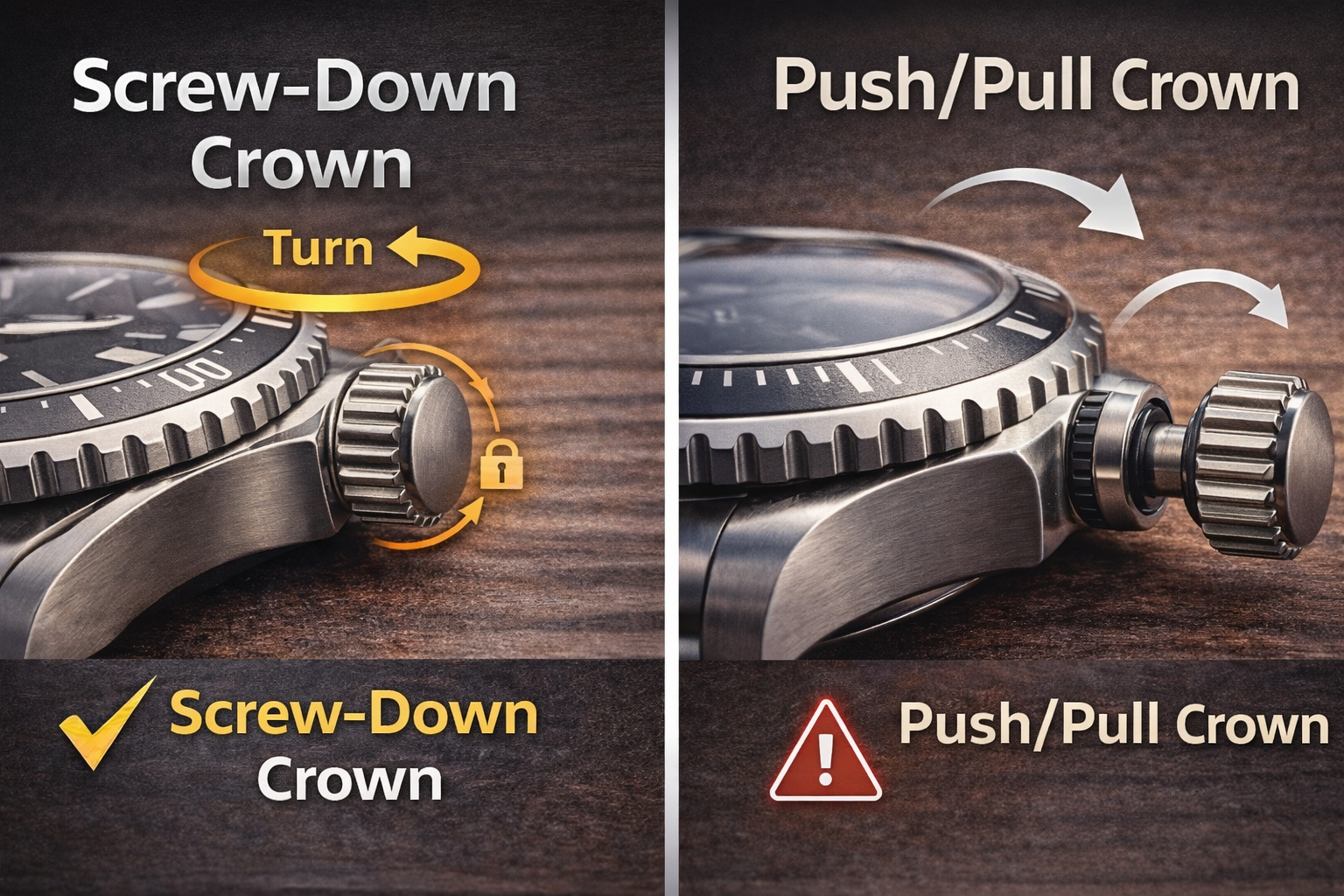
A screw-down crown helps improve water resistance by tightening the seal.
A normal push/pull crown can still be water resistant, but it’s generally less forgiving.
If you want a watch that handles daily use and water exposure better, a screw-down crown is a practical plus.
5) How to Keep Your Watch Water-Resistant Longer
Simple habits make a big difference:
-
Always push/screw the crown fully closed
-
Avoid adjusting the crown when wet
-
Avoid hot water exposure
-
Rinse after saltwater (if rating allows)
-
Dry the watch after water contact
-
Consider periodic water resistance checks if you swim often
If you’re also comparing watch types, you may like this guide: Mechanical vs Quartz Watches: Which Is Better for You?
6) Quick FAQ
Can I swim with a 50m watch?
Sometimes, but it’s not recommended for regular swimming. For safer swimming use, 100m is the better baseline.
Does a leather strap handle water well?
Not really. Leather absorbs moisture and degrades faster. If you expect water contact, rubber or steel is usually better.
Does “water resistant” mean waterproof?
No. Most watches are water-resistant, not “waterproof.”
Conclusion
Water resistance is best understood as a real-life use rating, not a depth promise.
If you want a watch you never worry about around water, 100m+ is usually the sweet spot for everyday life.
And if accuracy is something you care about too, you can also read: Mechanical Watch Accuracy: What’s Normal? (+/- Seconds per Day)